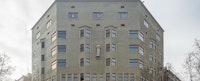
Casal Sant Jordi (Casa Tecla Sala)
C/ de Casp, 26
 Offices/Properties
 75.000 ft²
 2 years
 Barcelona, Spain
Comprehensive rehabilitation of a historic building for office and service use in Barcelona
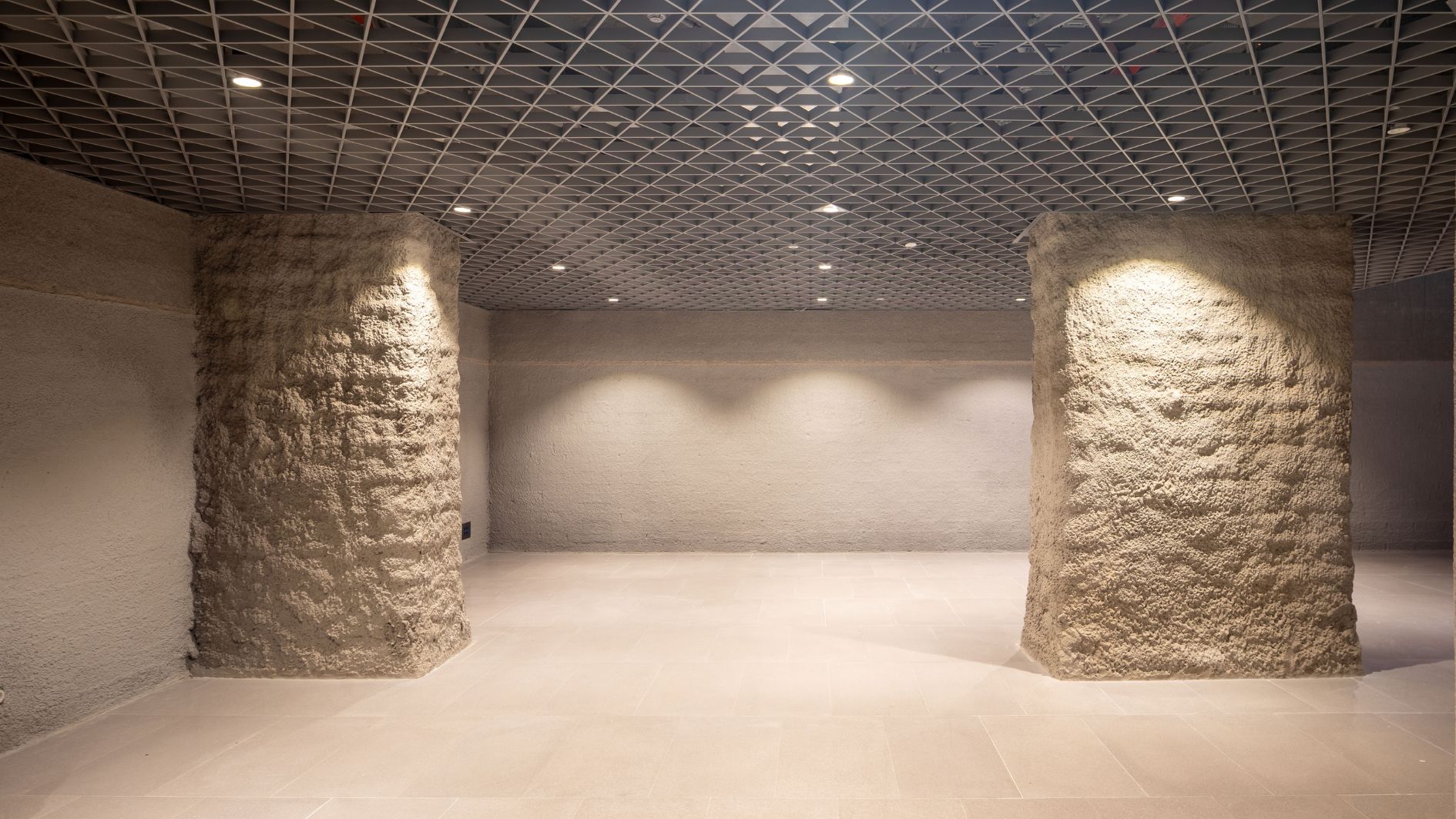
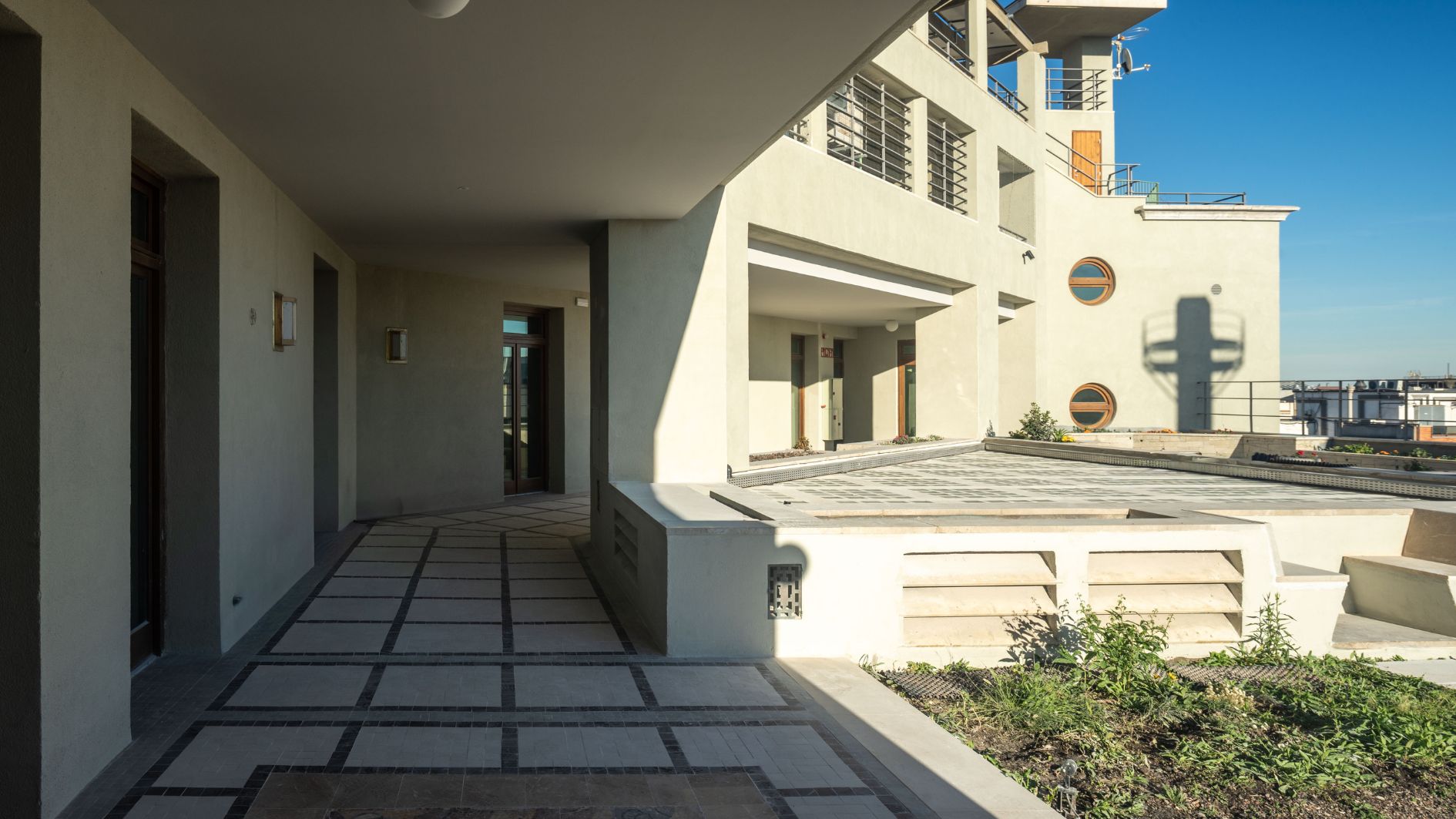
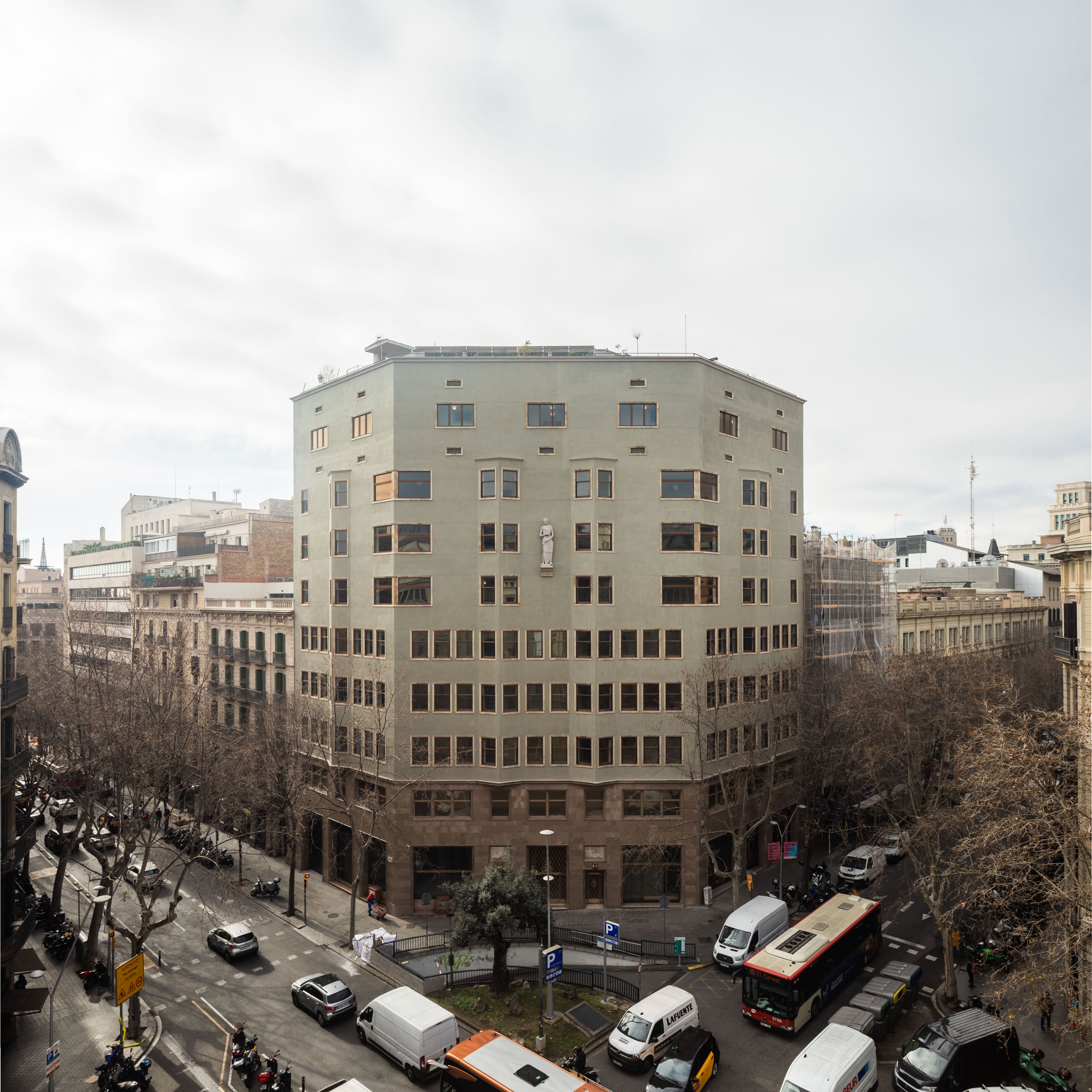
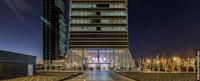
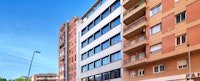
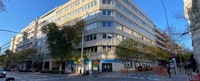
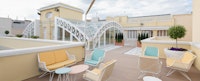
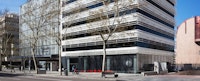
Located at the intersection of Calle Pau Claris 81 and Casp 26, in the heart of Barcelona's Eixample district, the Casal Sant Jordi (Casa Tecla Sala) is one of the earliest examples of rationalist architecture in the city. Designed by Francesc Folguera Grassi between 1929 and 1931, this protected building, listed as a BCIL (Local Cultural Asset), has undergone a comprehensive renovation aimed at restoring its architectural value and adapting it to contemporary standards of comfort, accessibility, technology, and efficiency.
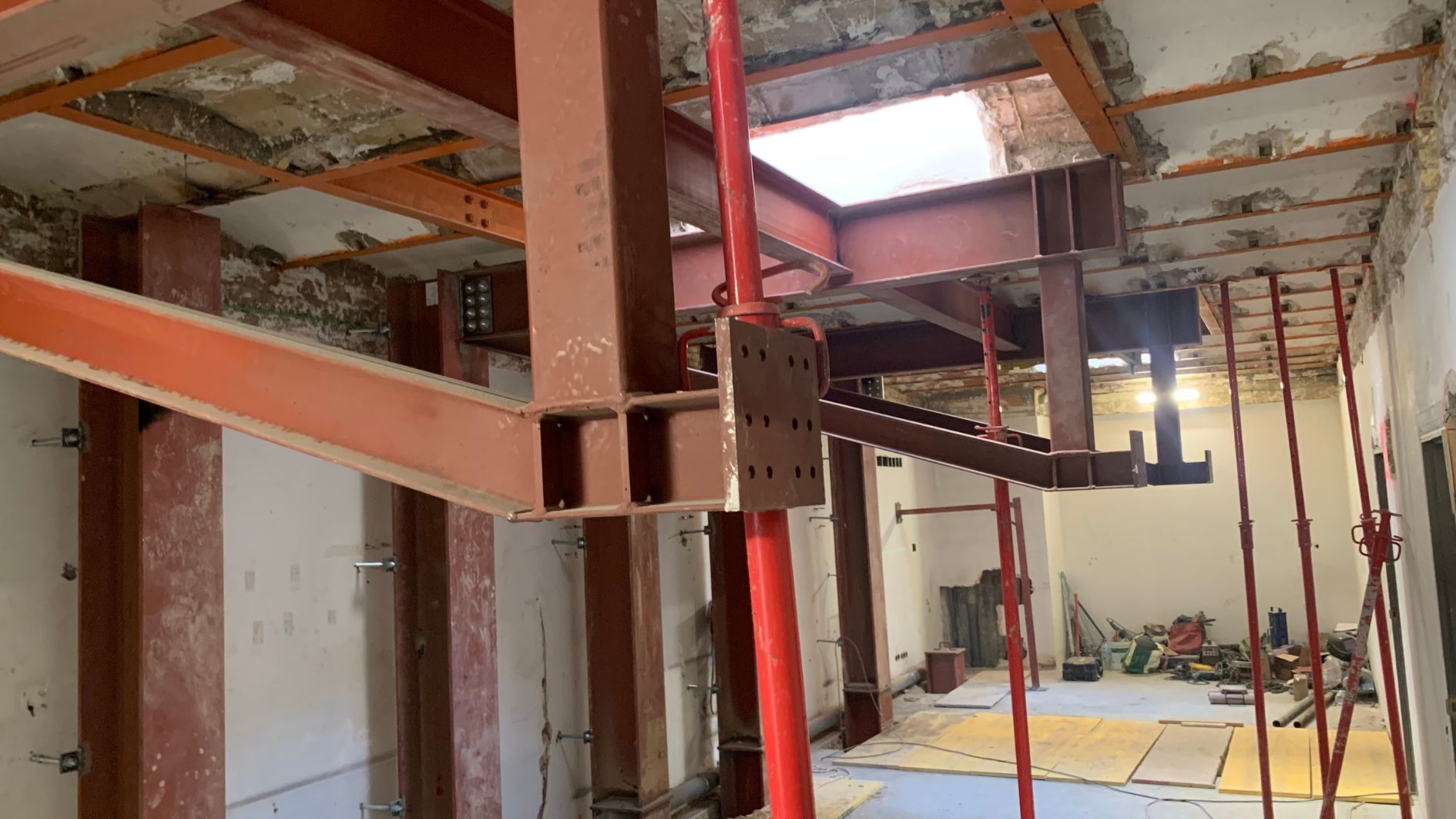
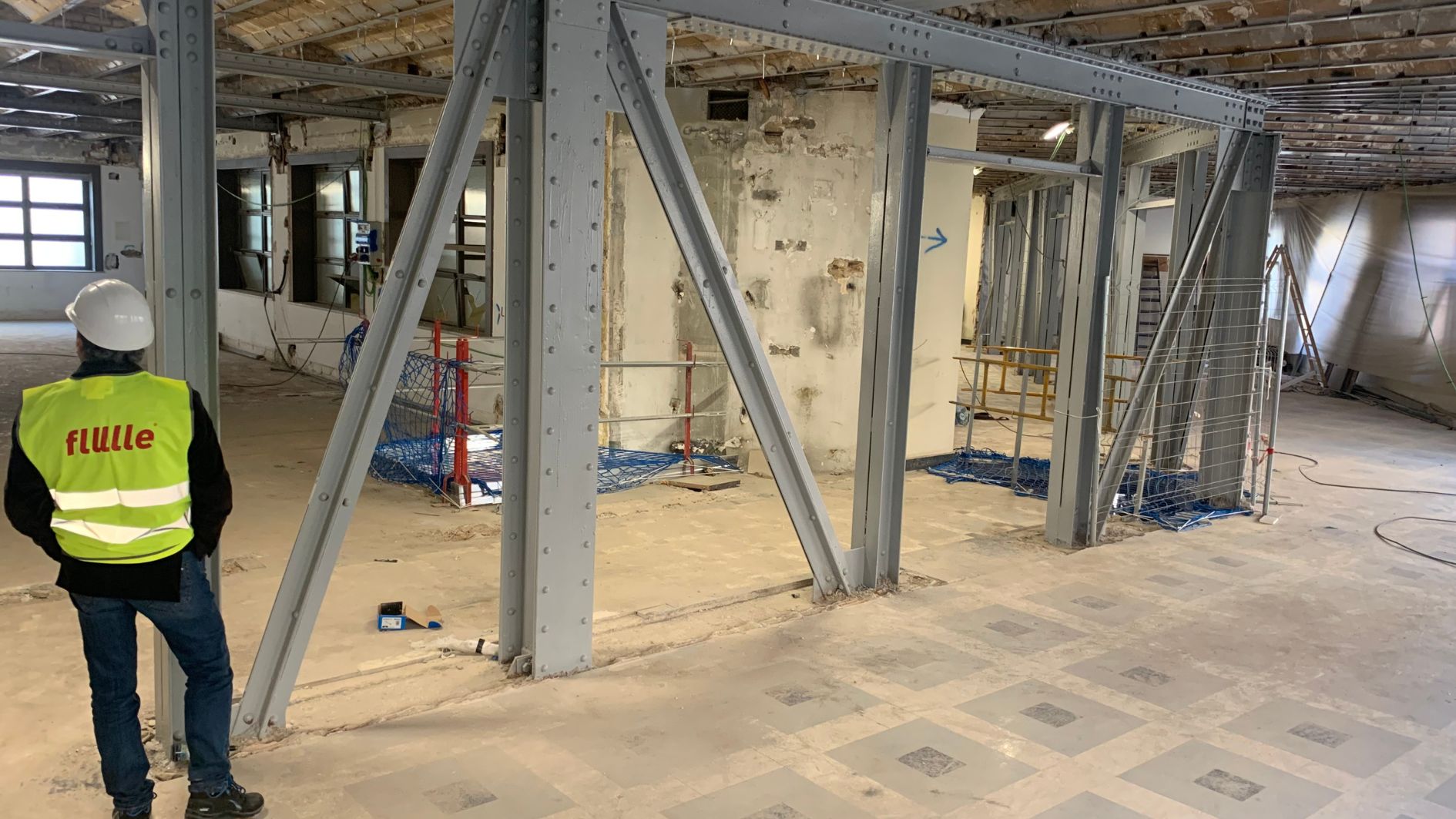
In 2023, Rex Spain ZDHL (Zurich Group) commissioned FLULLE to carry out the comprehensive renovation of the building, with particular attention to the conservation and restoration of protected elements in accordance with the heritage criteria established by the city of Barcelona. The architectural project was developed by Addenda Architects, and the building will house the Barcelona headquarters of IES Abroad.
With a floor area of 6,866.60 m² and 11 floors, the project has transformed a building of significant historical value into a fully modernized office and service space, capable of combining heritage, innovation, and new uses.
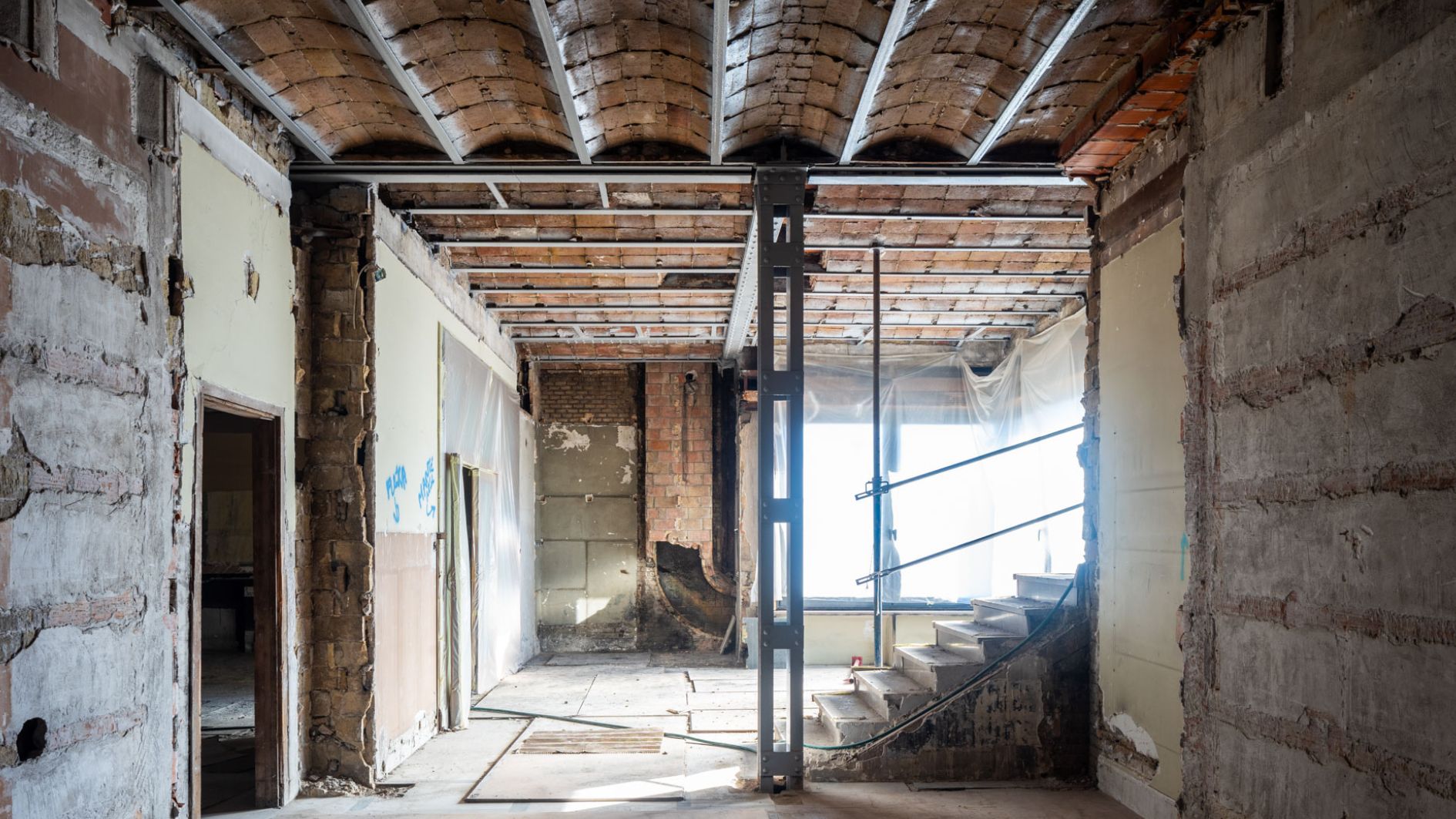
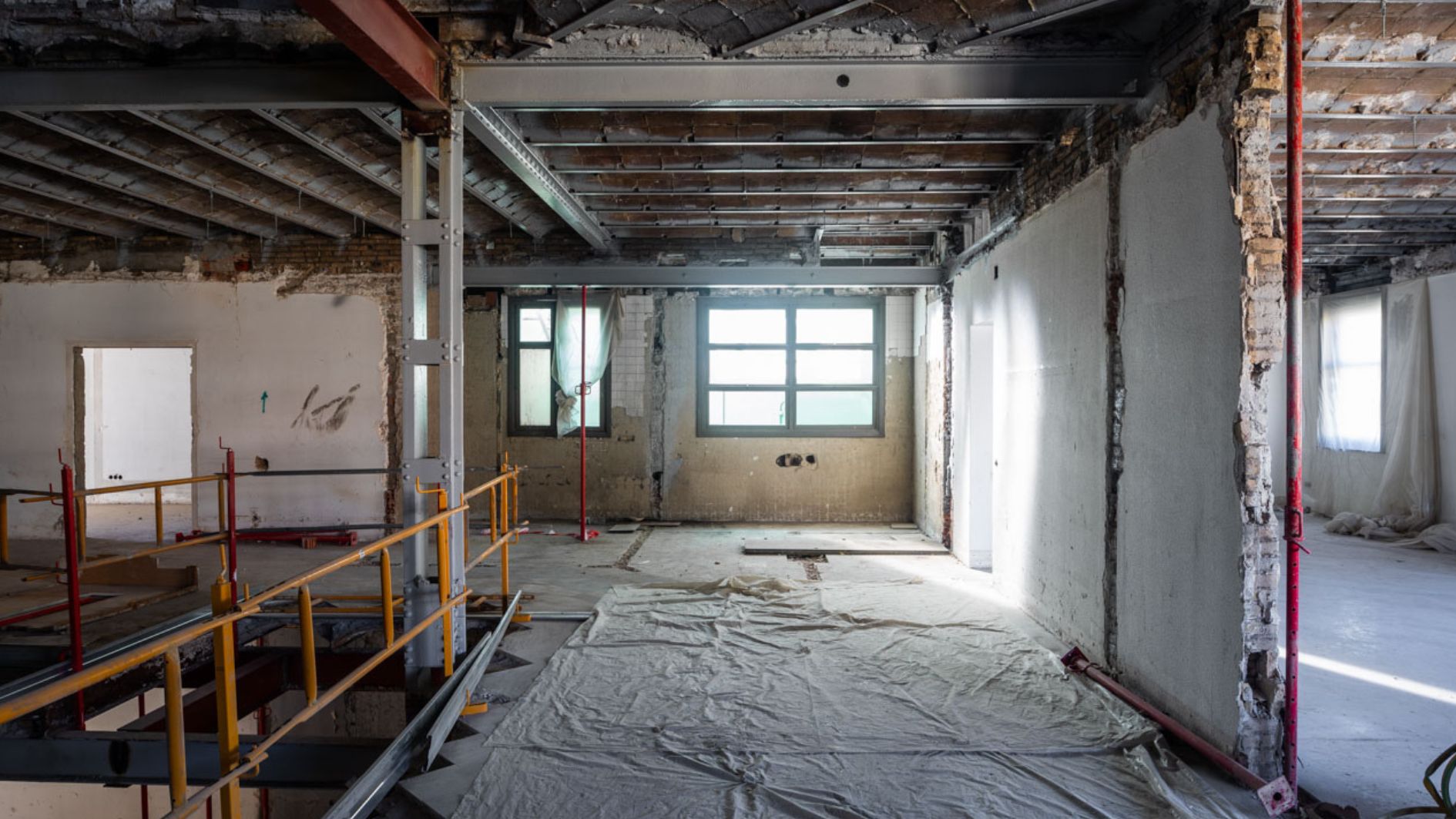
The Challenge
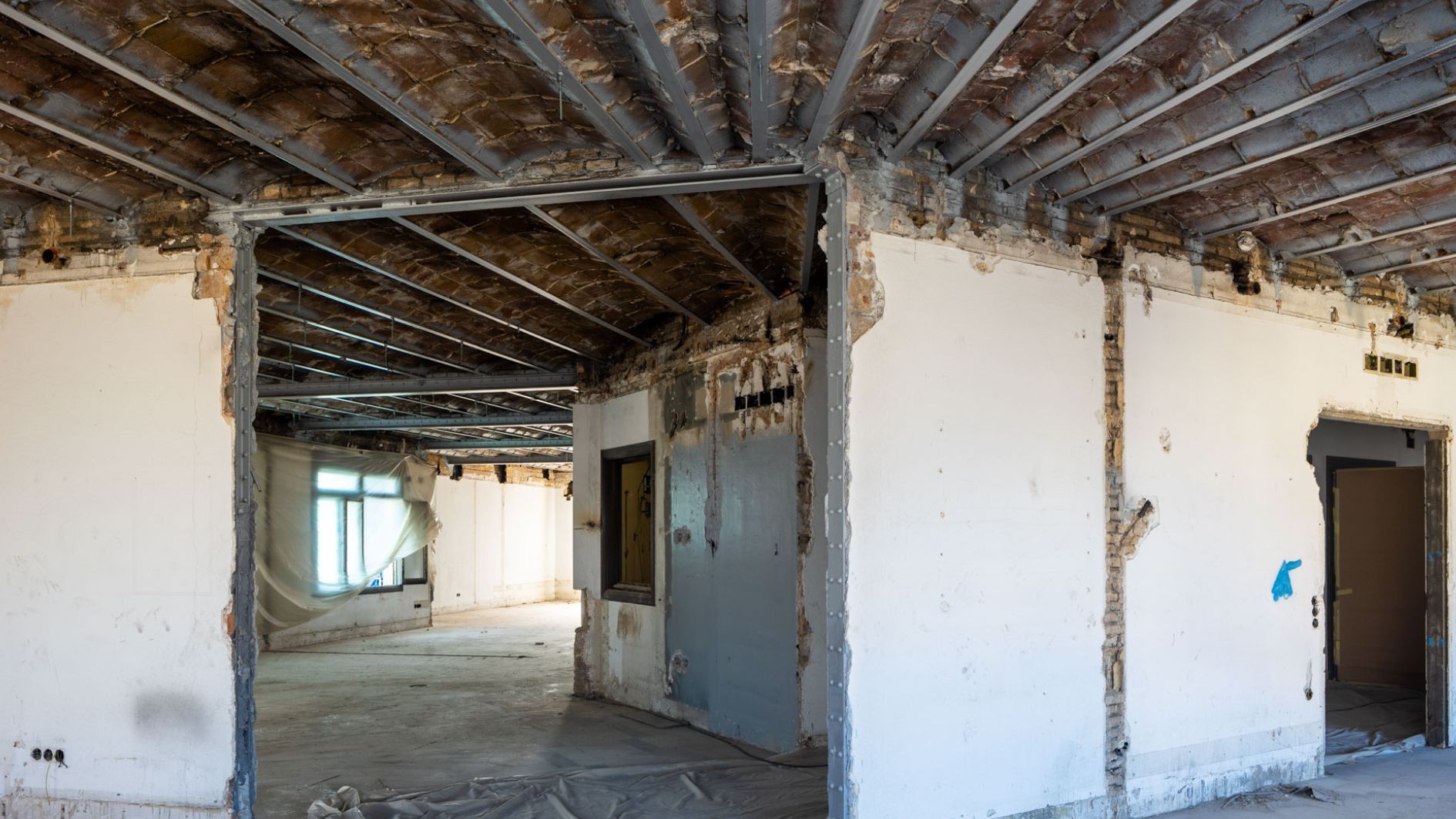
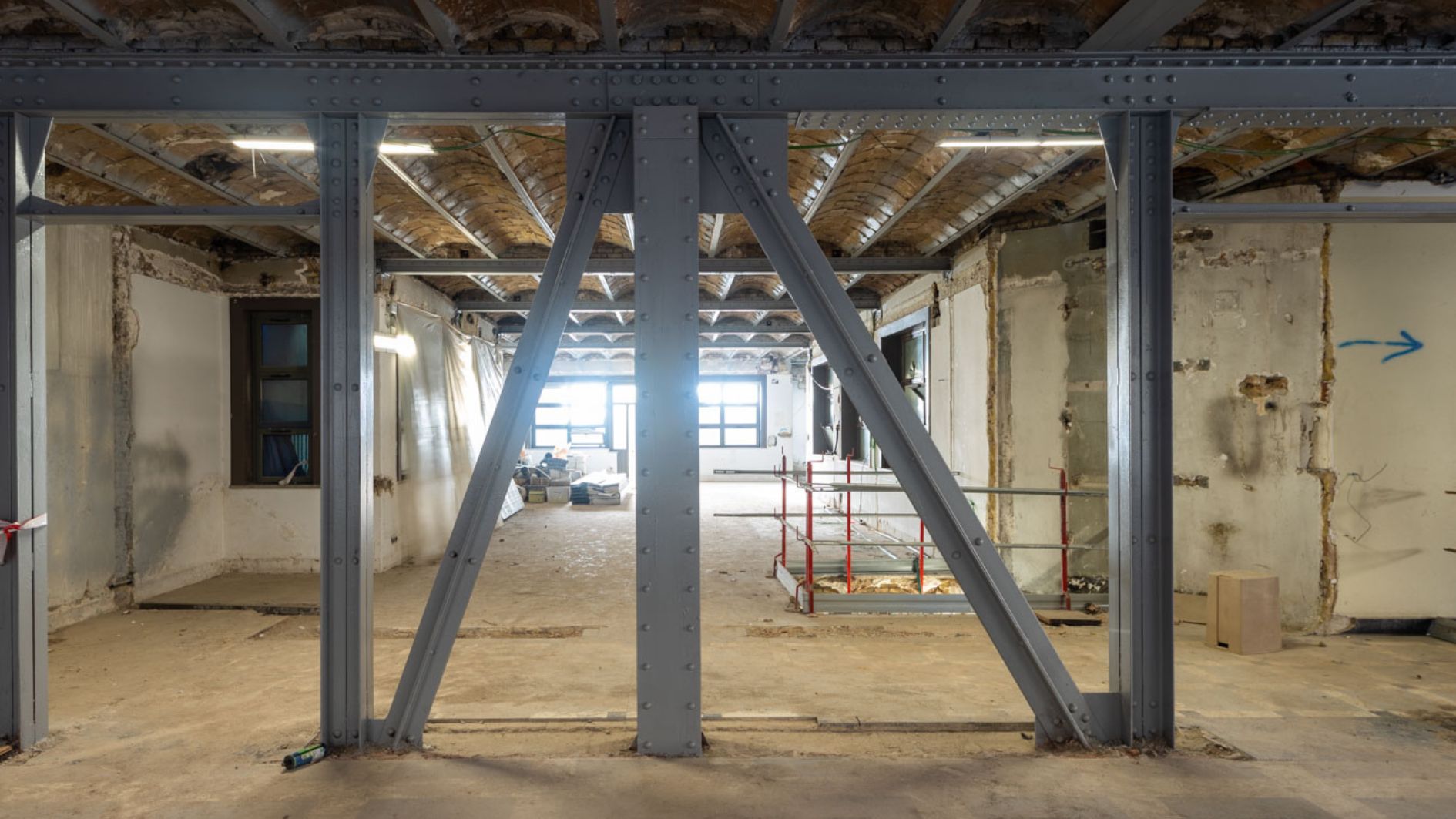
The project required a highly complex technical rehabilitation of a historic building with protected architectural, artistic, and decorative elements. The challenge was to adapt the building to current requirements for operation, accessibility, safety, and facilities, without losing the original identity of this unique asset within Barcelona's heritage.
The intervention of FLULLE
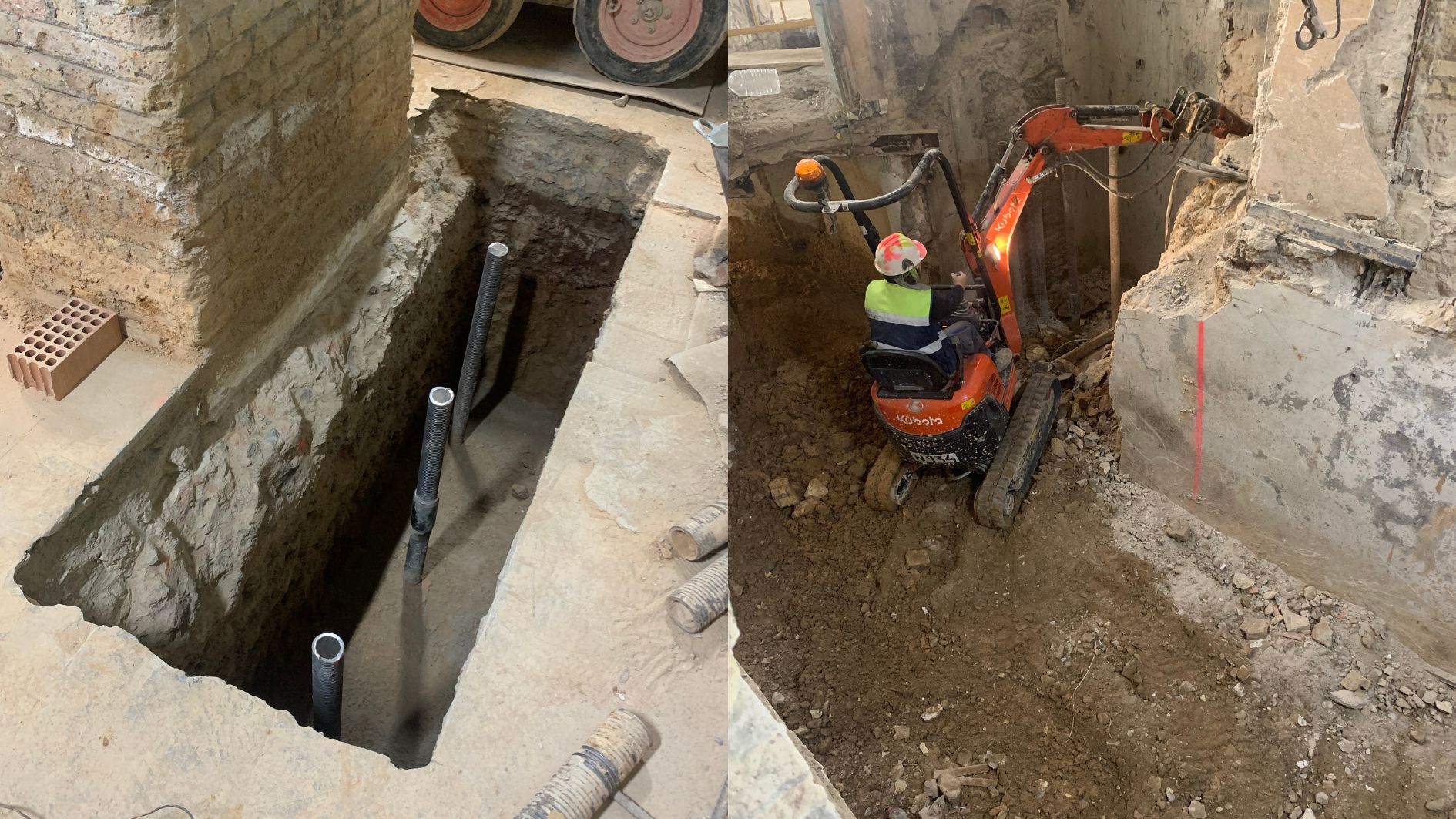
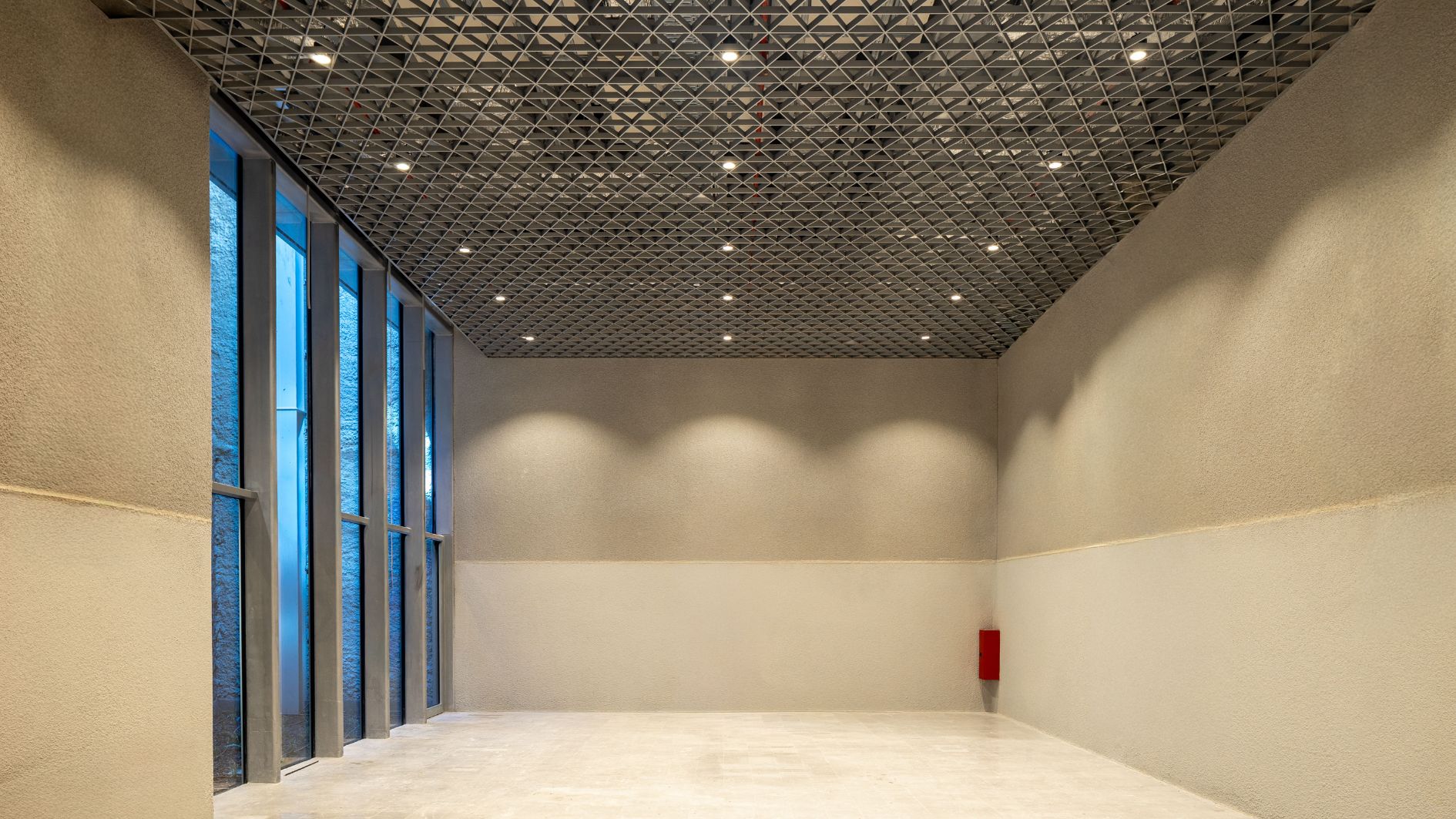
The scope of work undertaken by FLULLE included a comprehensive intervention on the structure, building envelope, interior spaces, finishes, and installations. Among the most significant tasks were the construction of special foundations using micropiles, the building of new metal structures to create unique spaces such as the auditorium, the structural reinforcement of existing elements, and the execution of selective and controlled demolitions.
The project also included the construction of reinforced concrete structural cores for new elevator shafts, resulting from the relocation of three elevators, along with the rehabilitation of two historic elevators preserved for their heritage value. In addition, the vertical circulation cores were redistributed, a key element in ensuring universal accessibility and proper connectivity between floors.
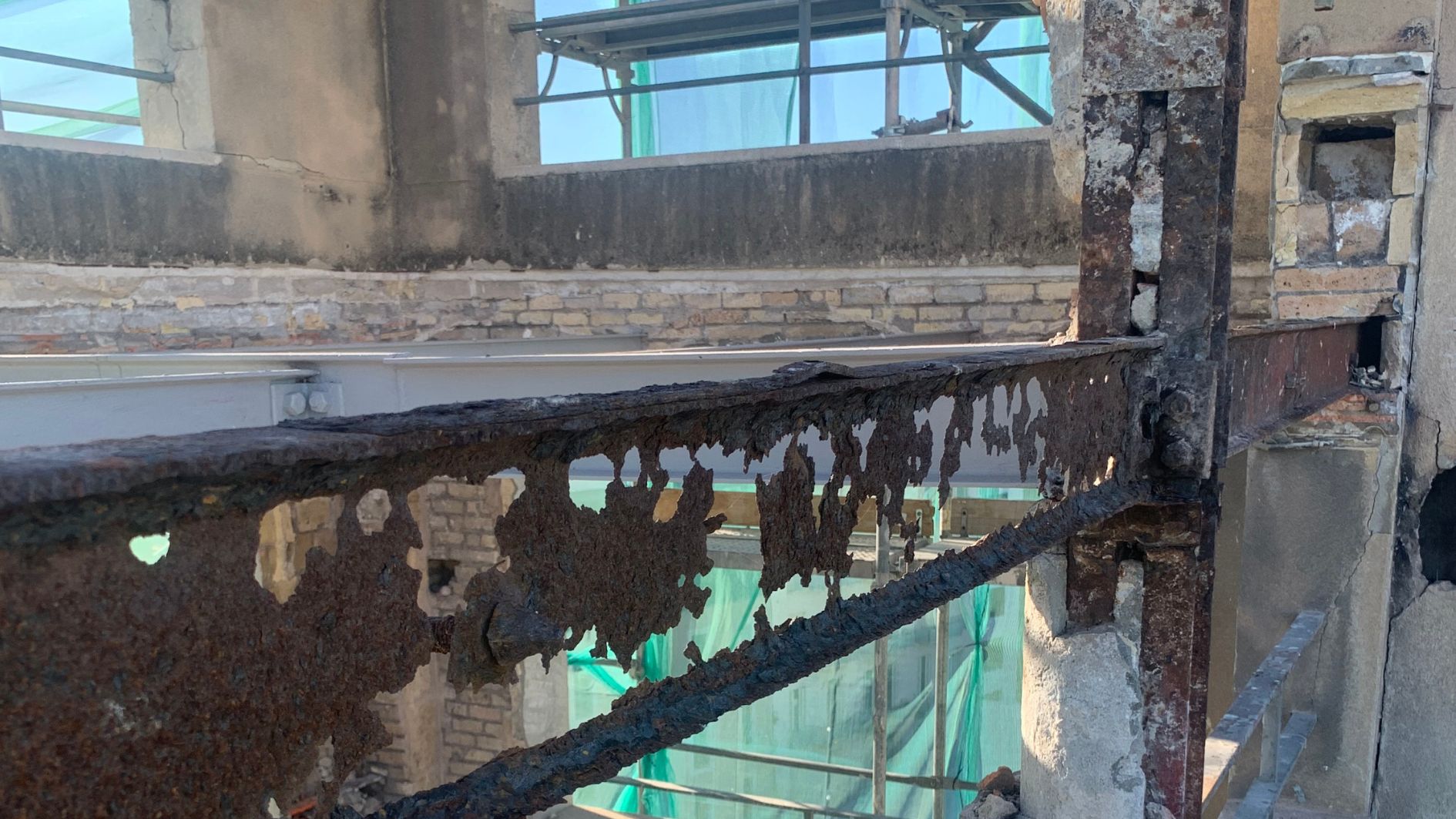
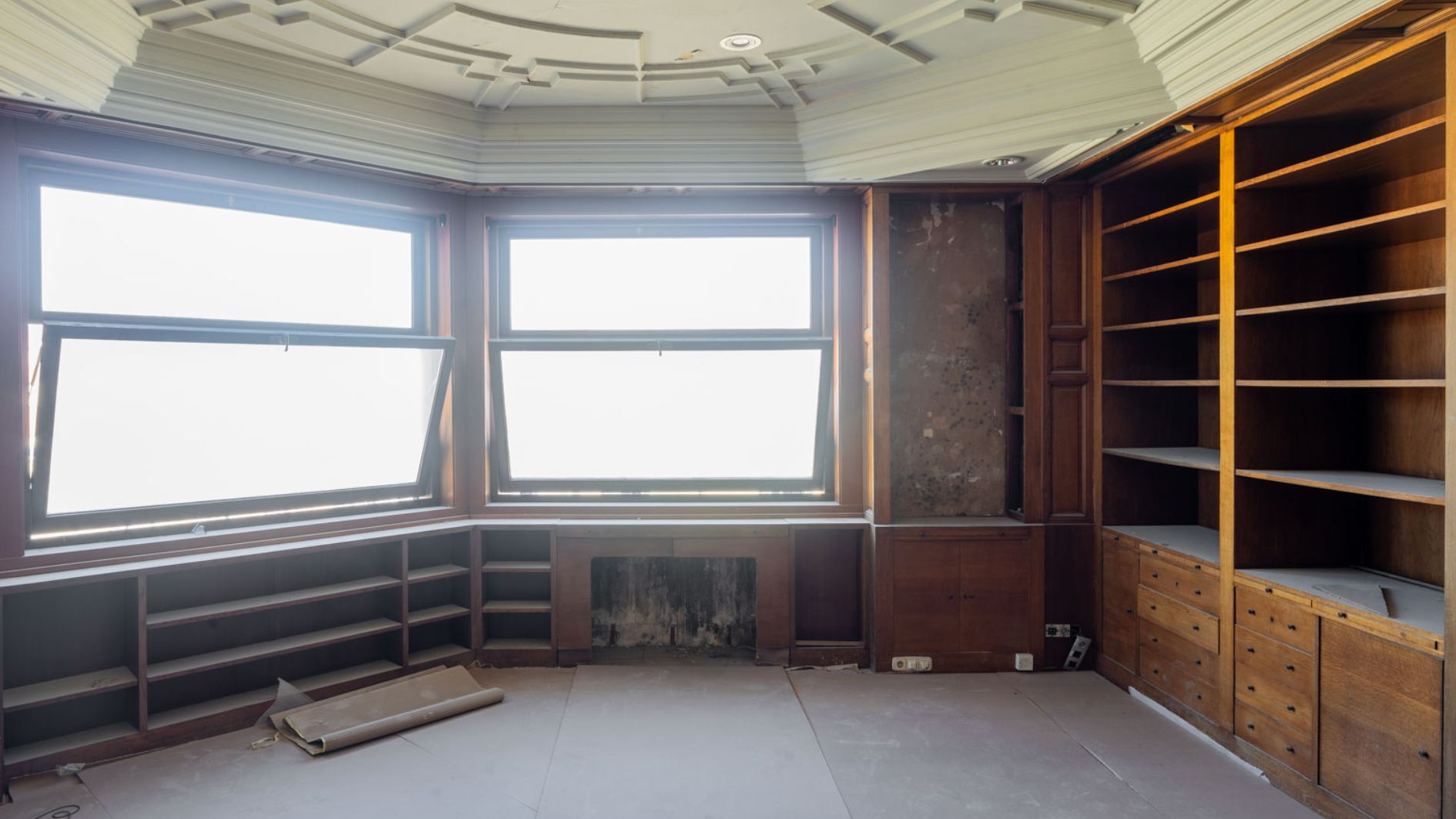
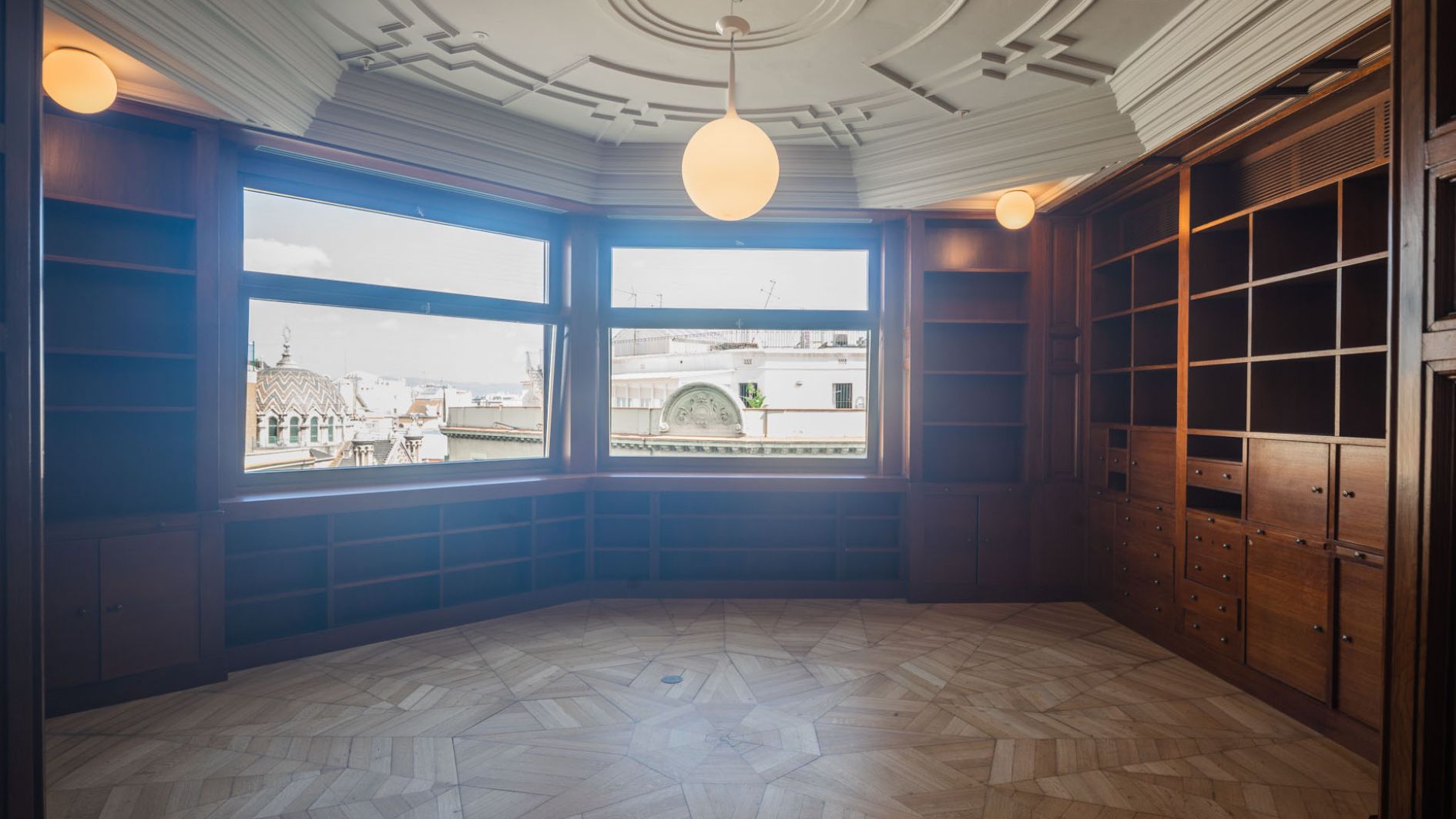
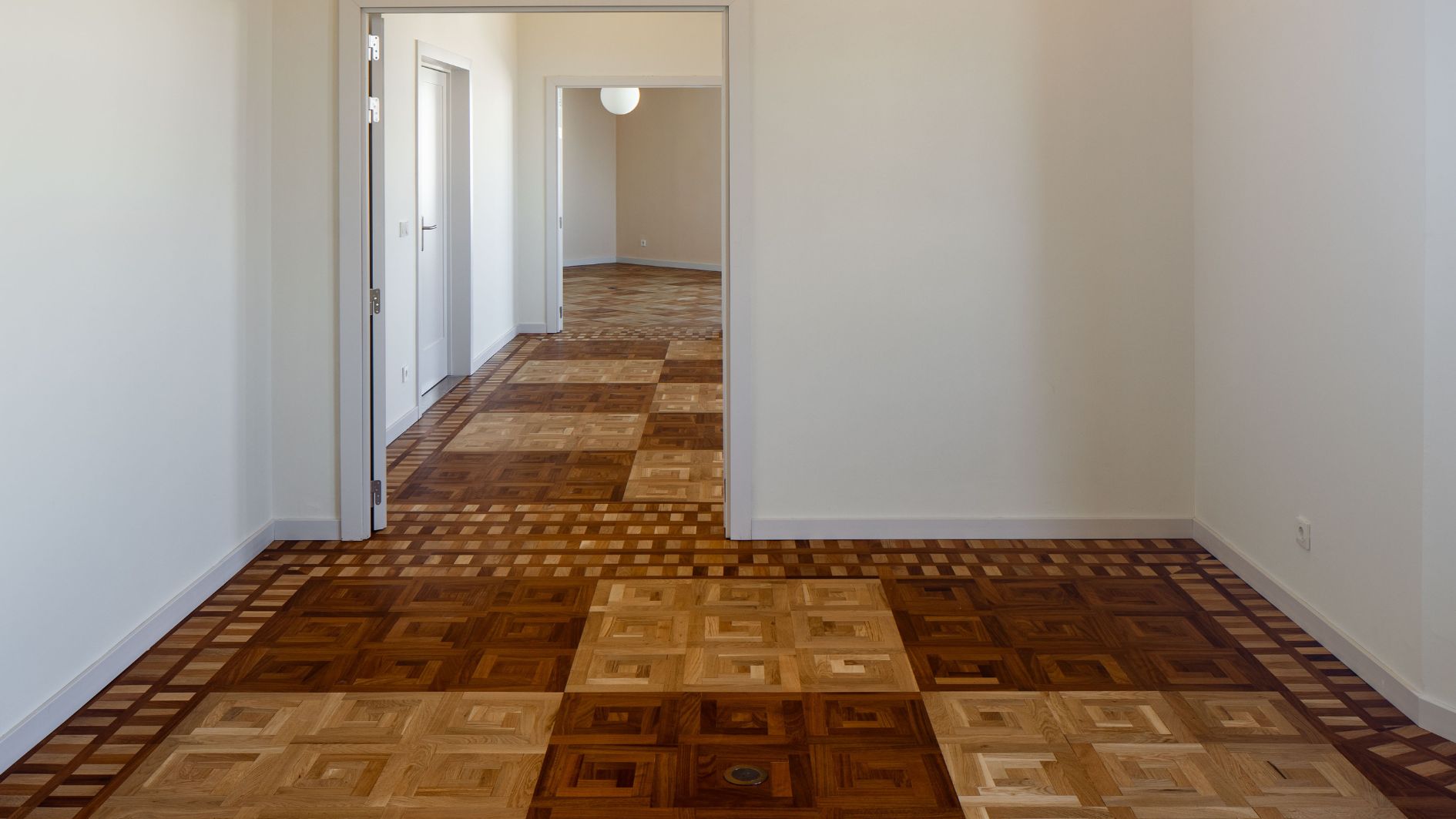
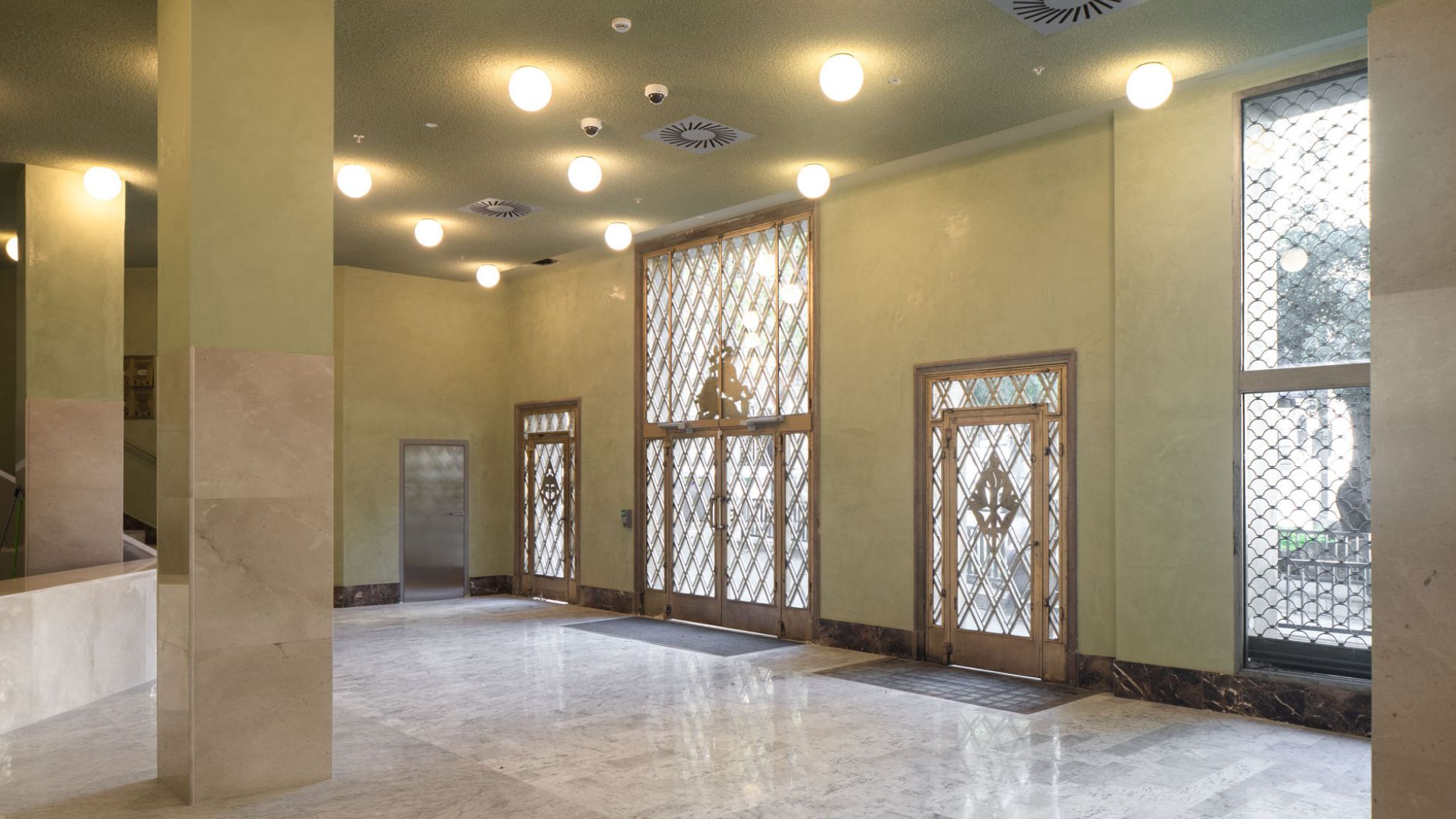
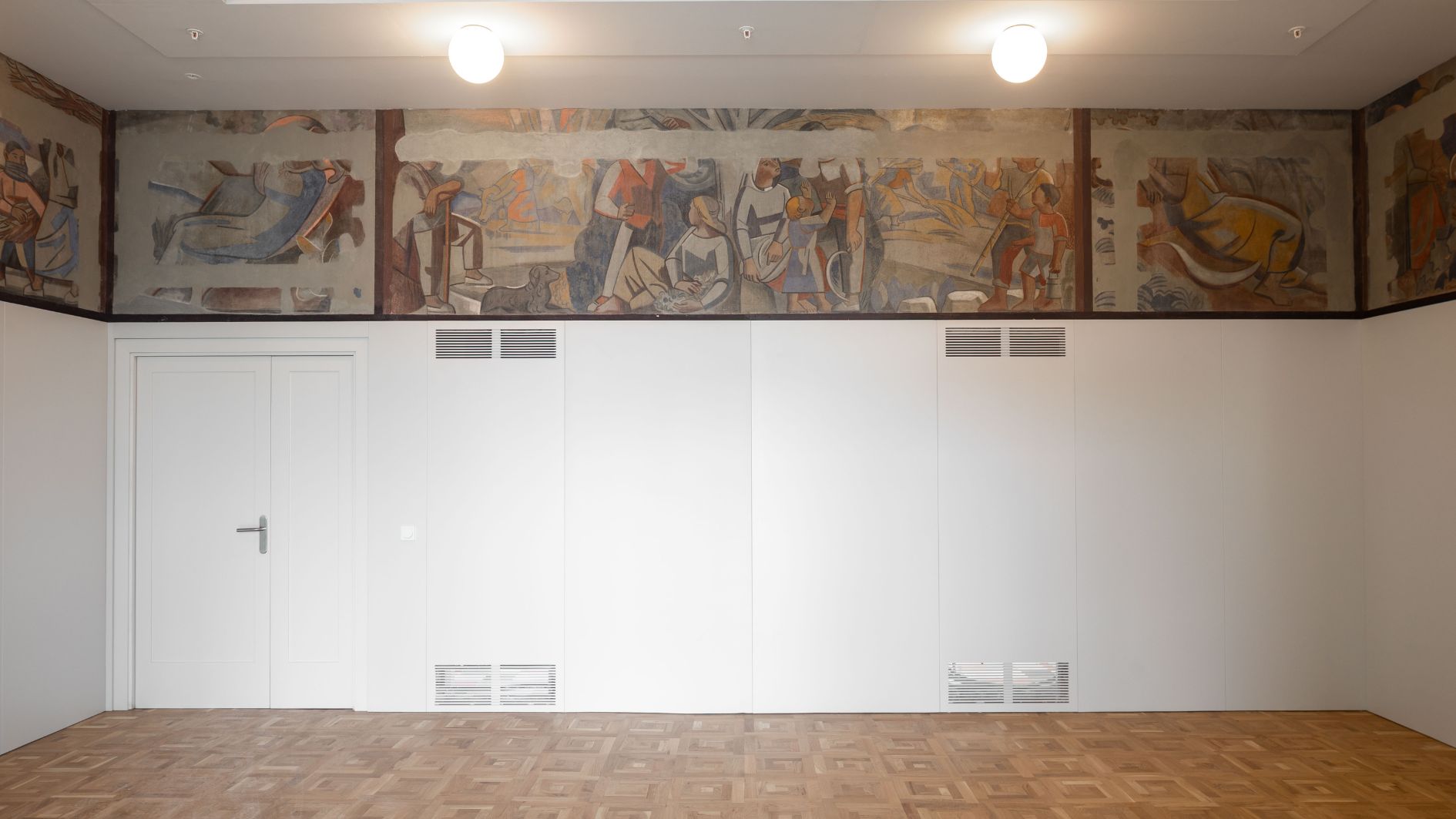
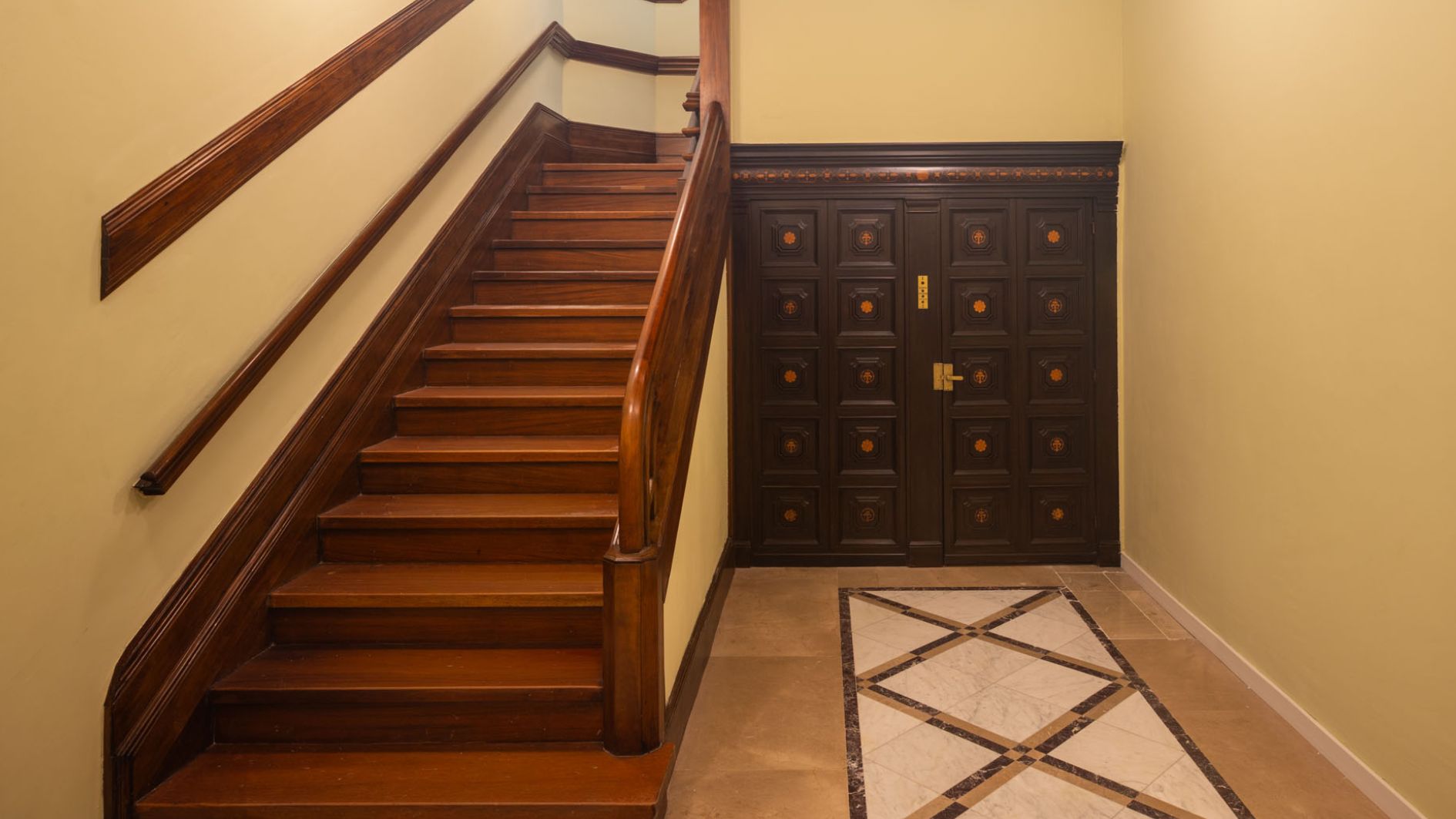
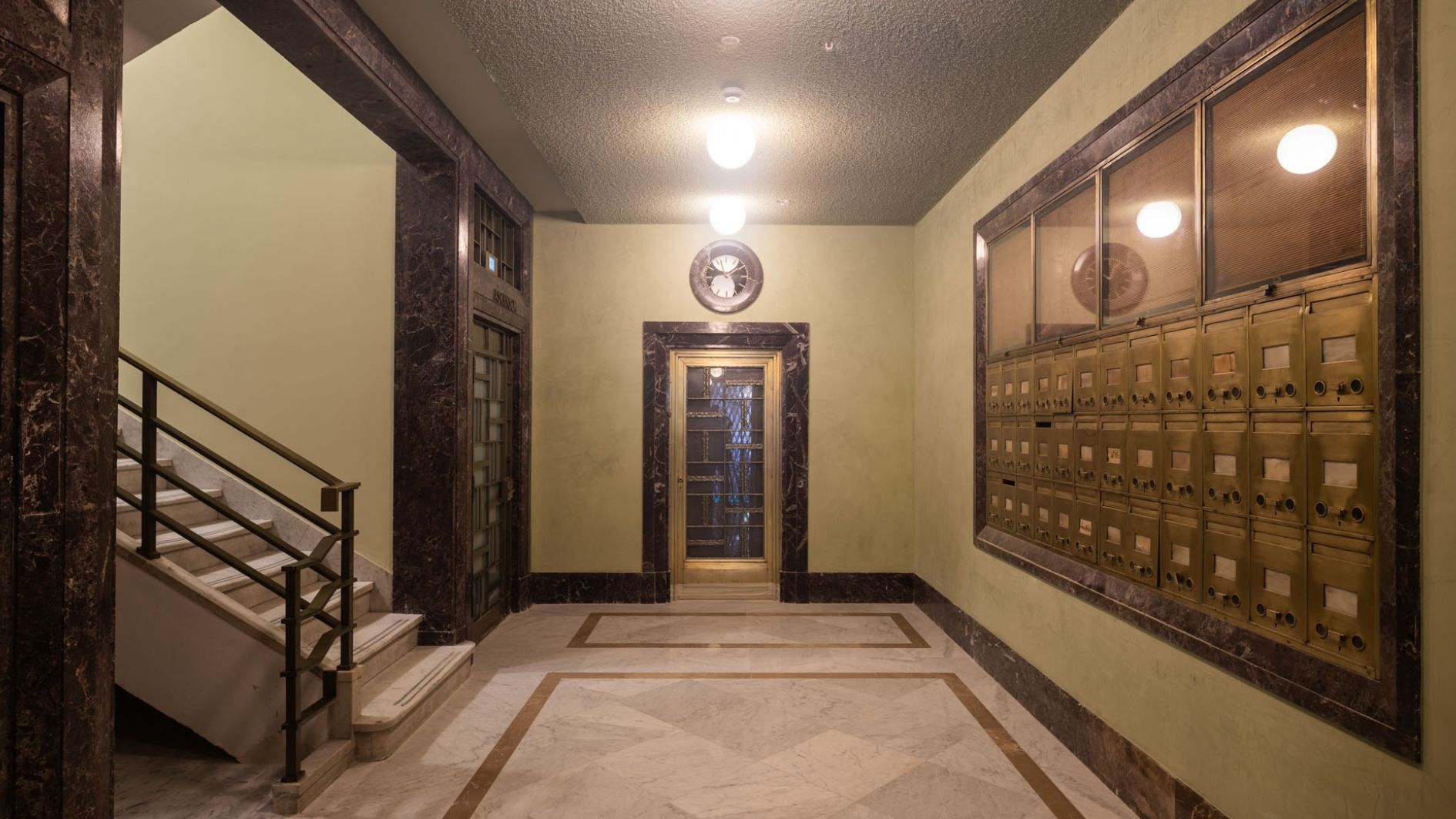
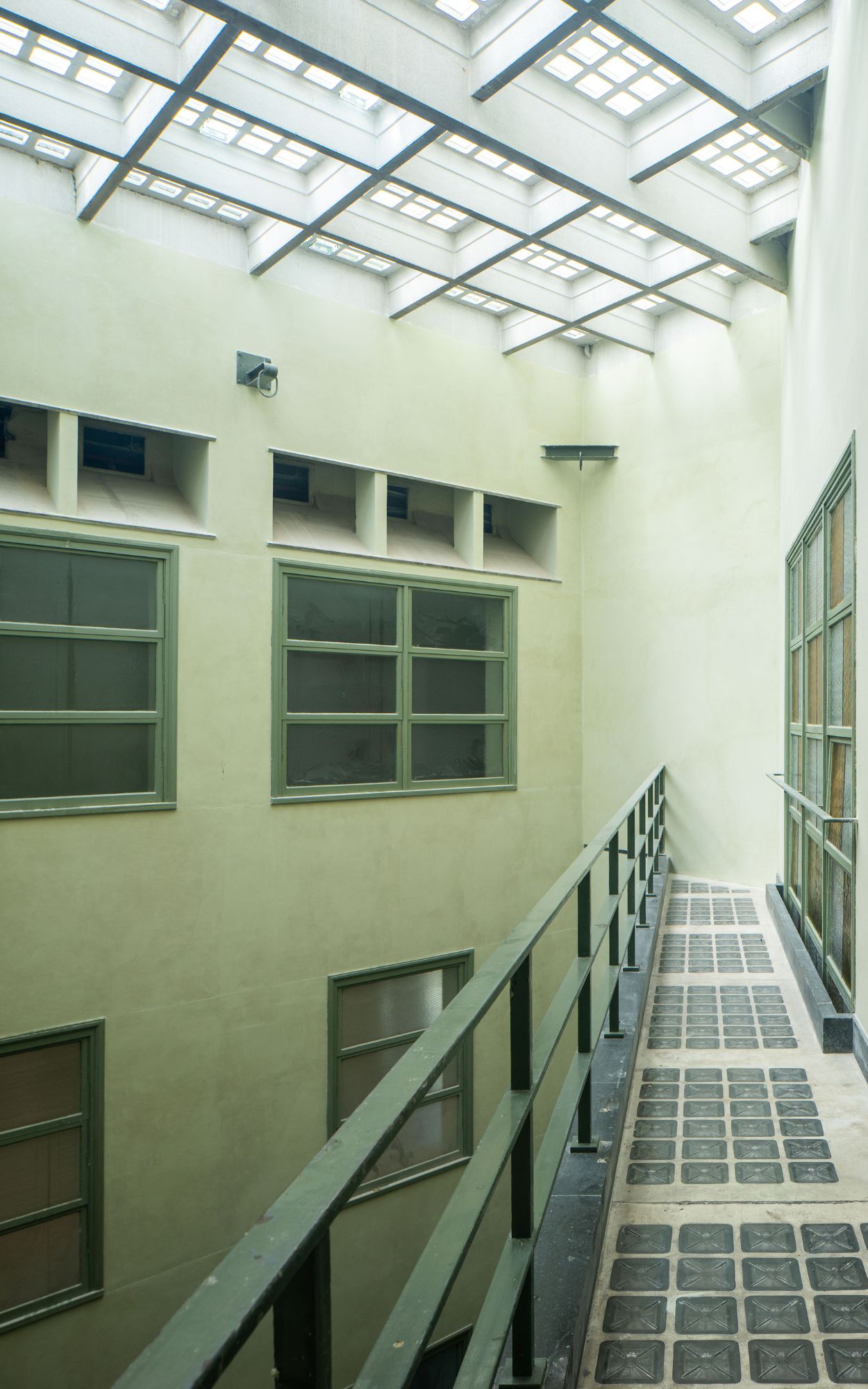
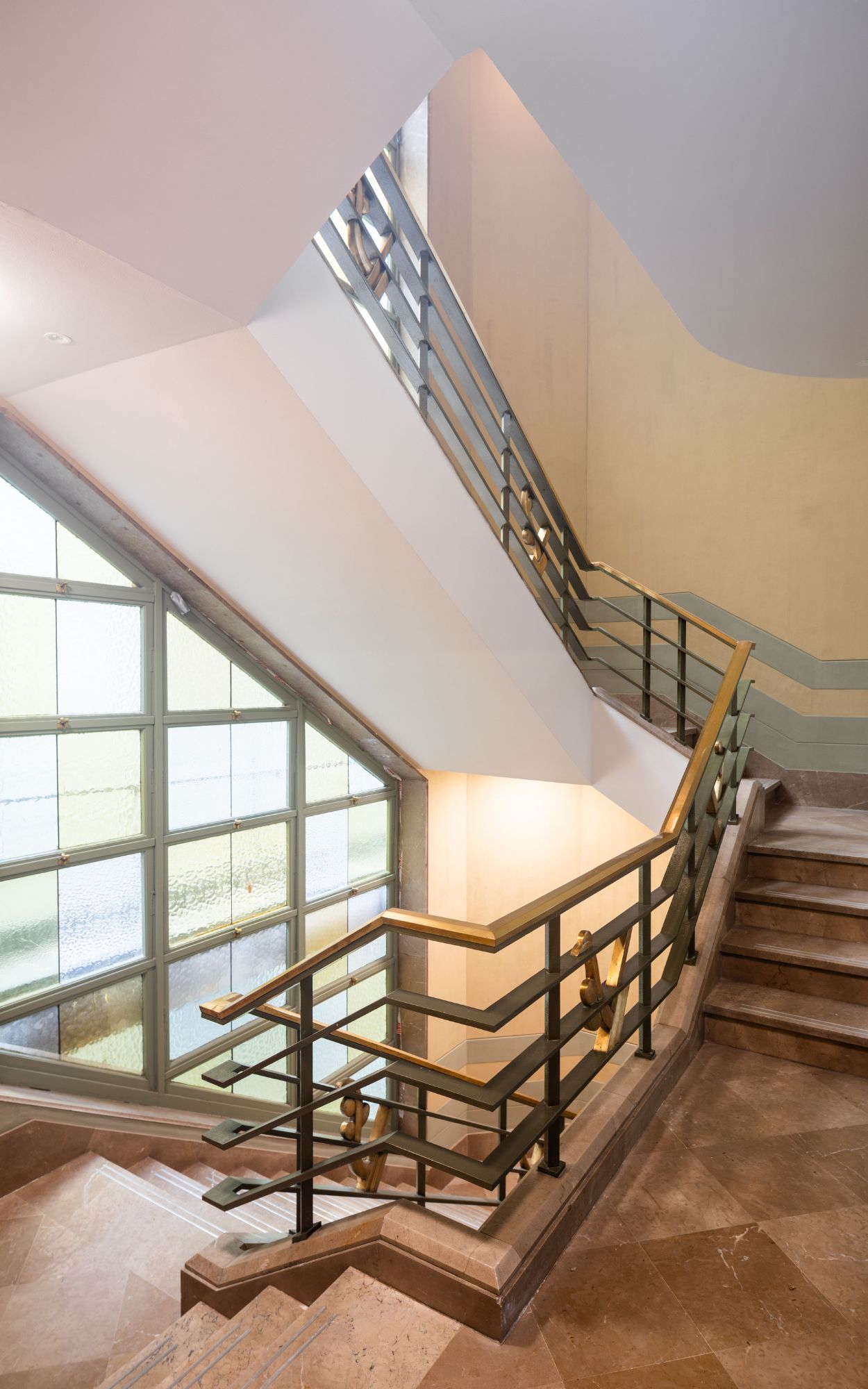
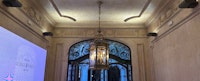
The intervention also incorporated actions on structural and facade pathologies, waterproofing treatments of roofs, as well as an important restoration and heritage recovery work: protected furniture, works of art such as frescoes, mosaics and sculptures, false ceilings, wooden joinery, historic stained glass, original parquet and marble floors, and the monumental marble staircases.
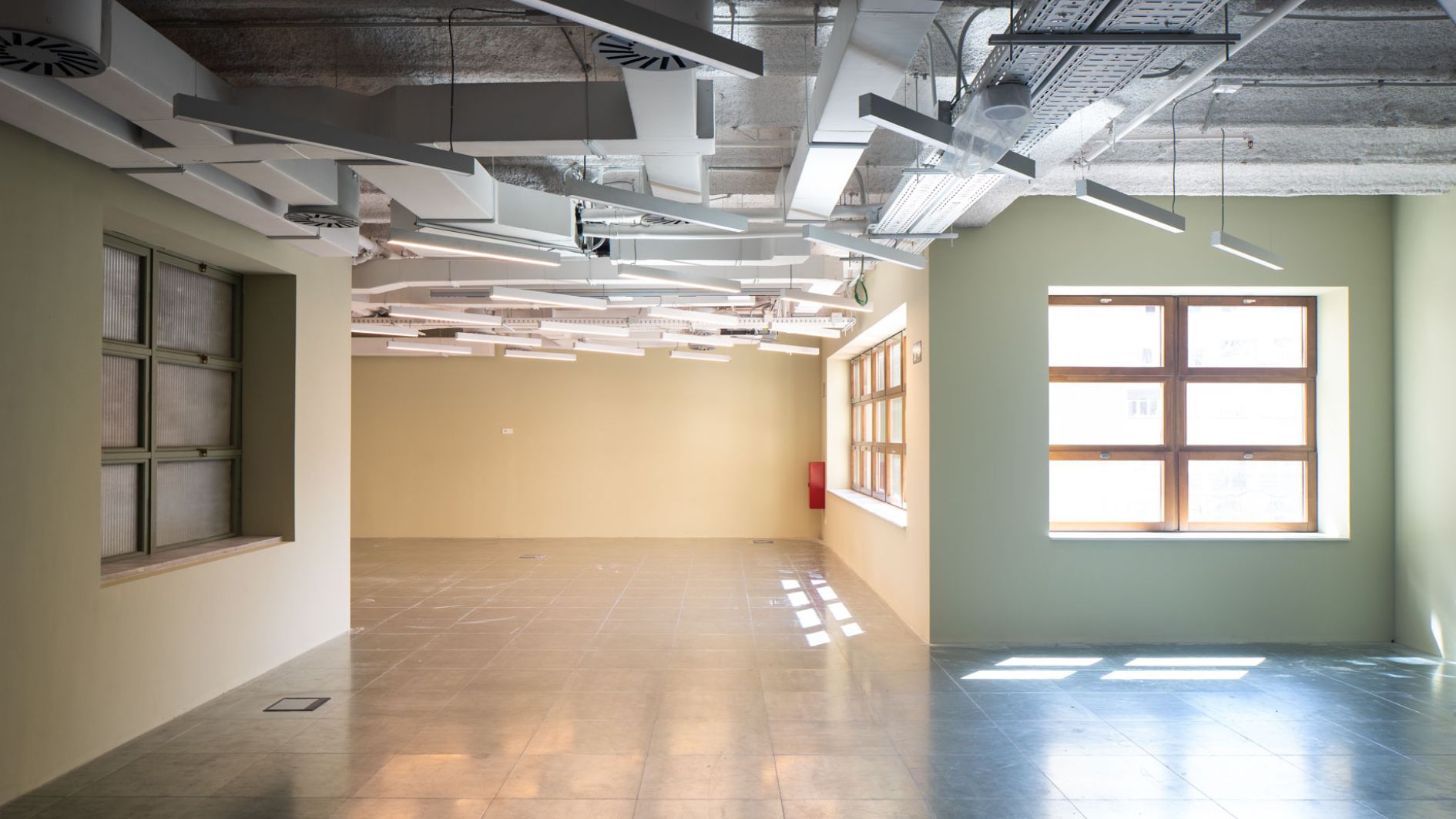
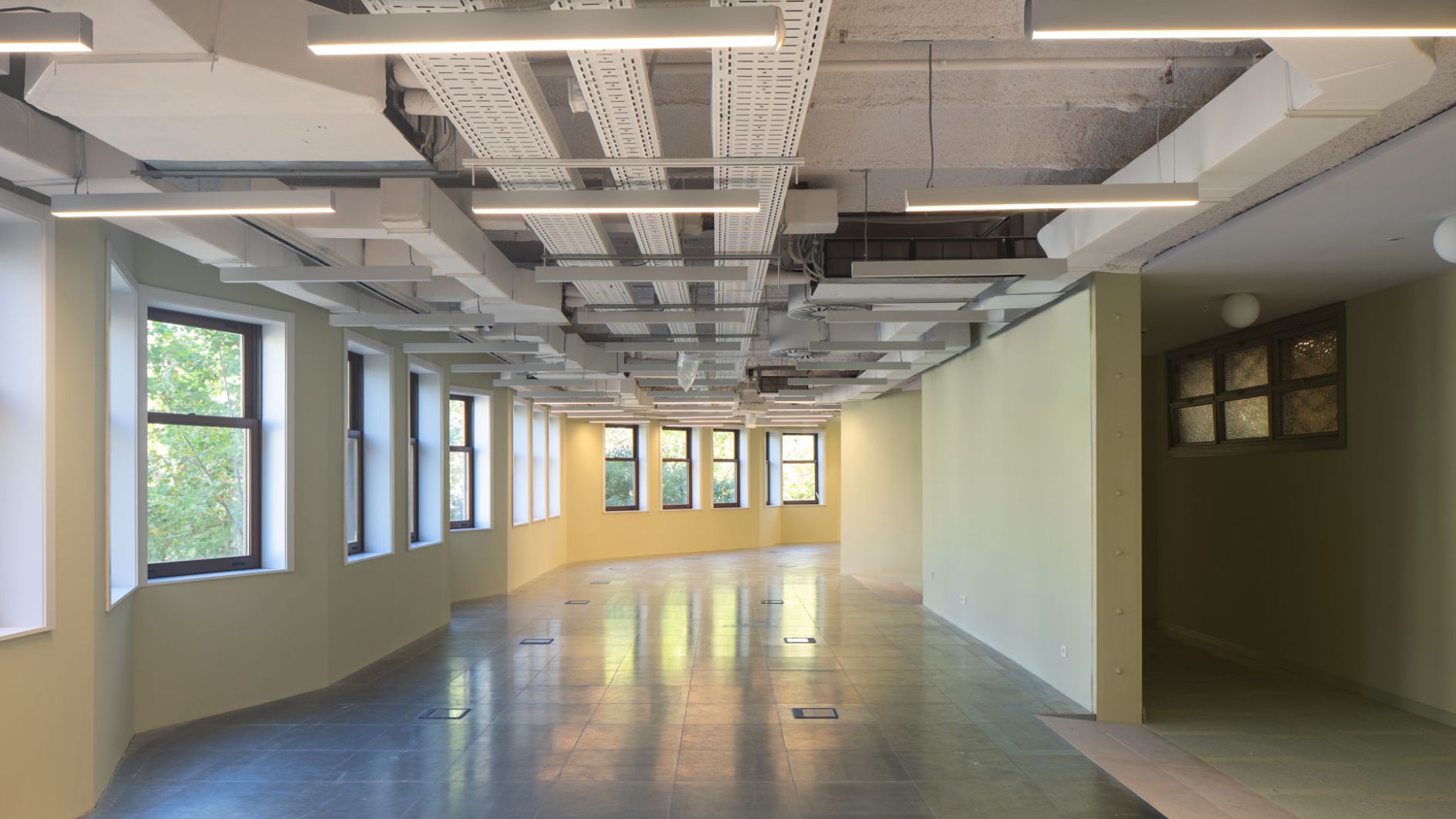
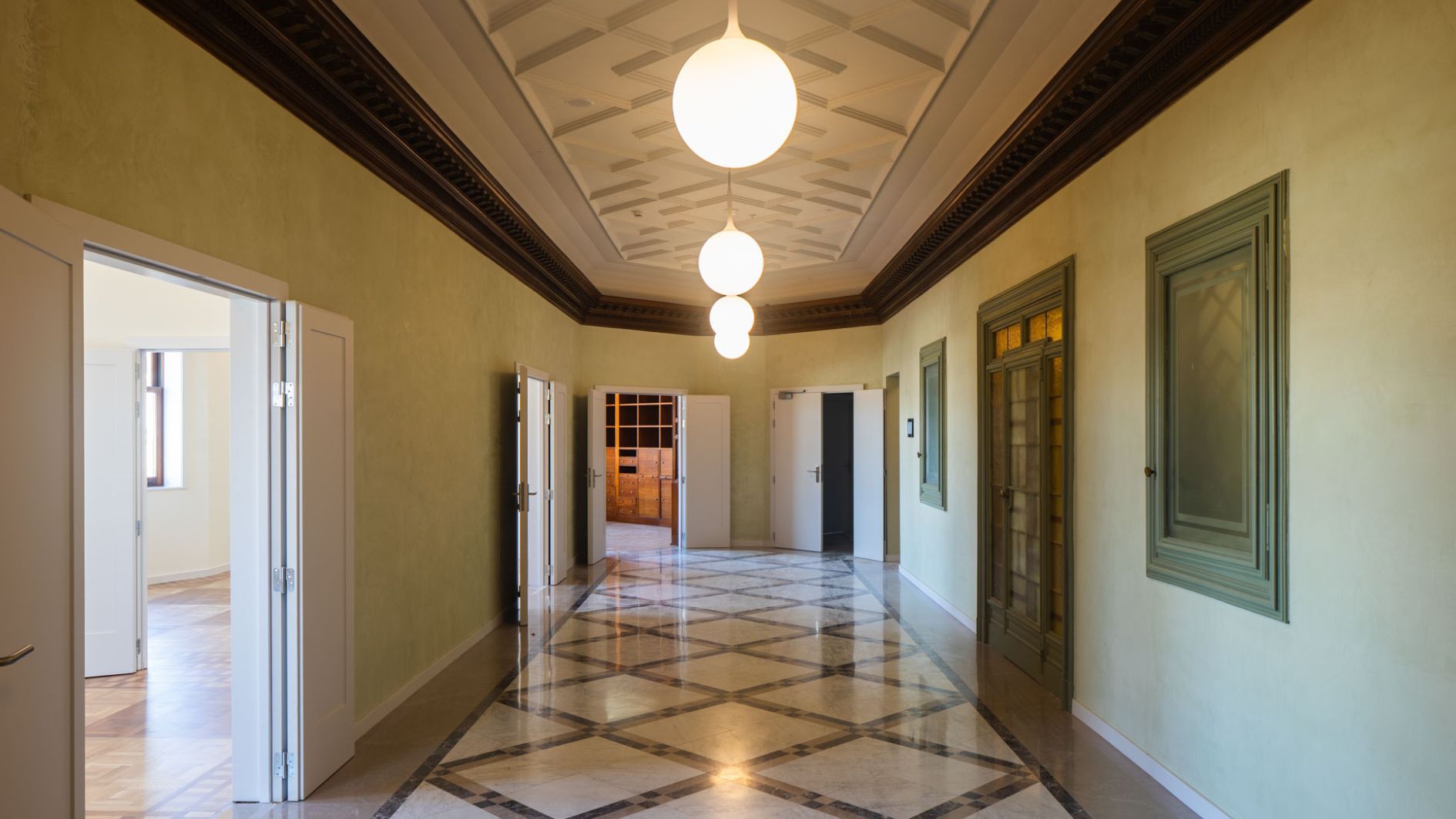
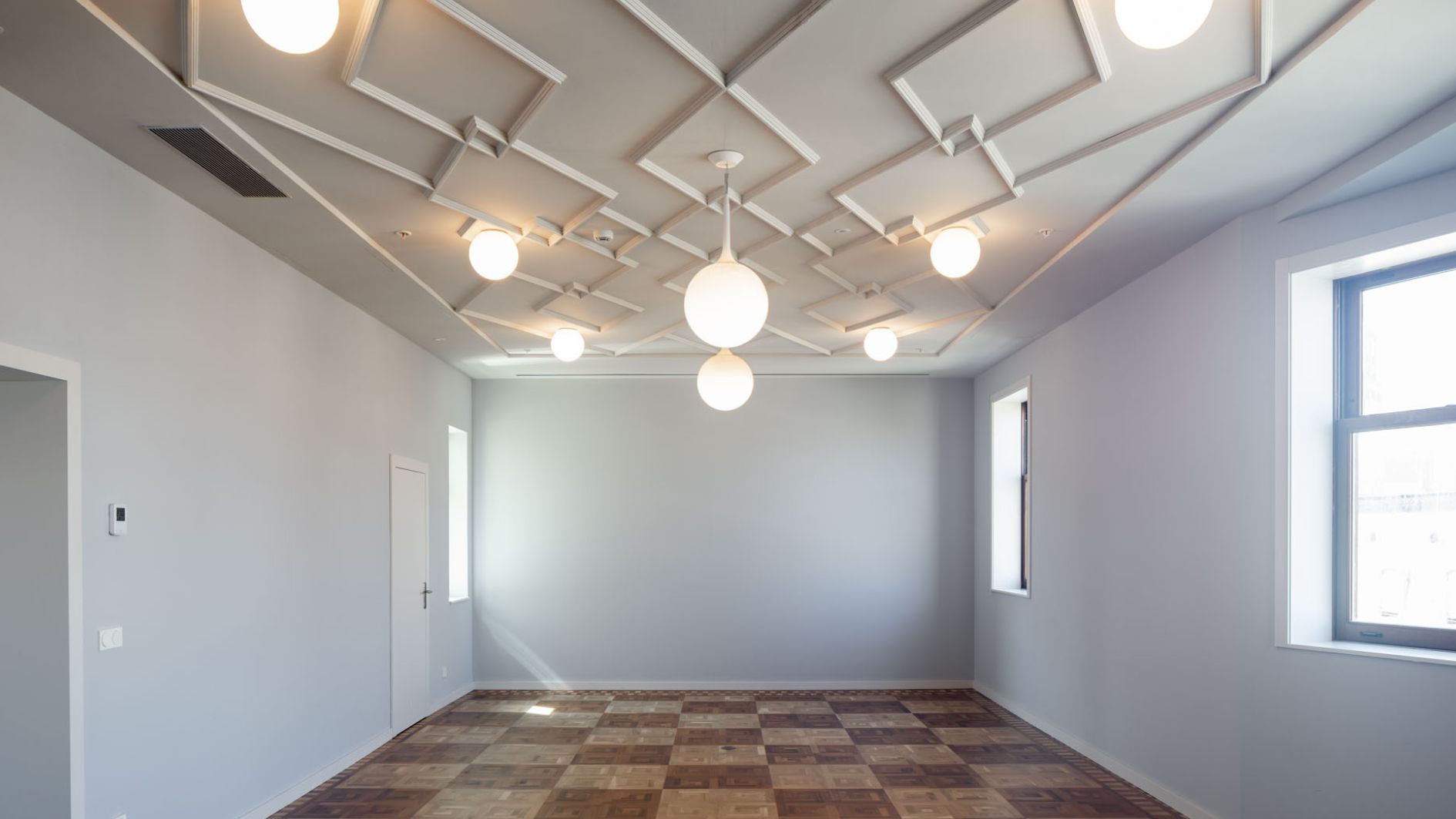
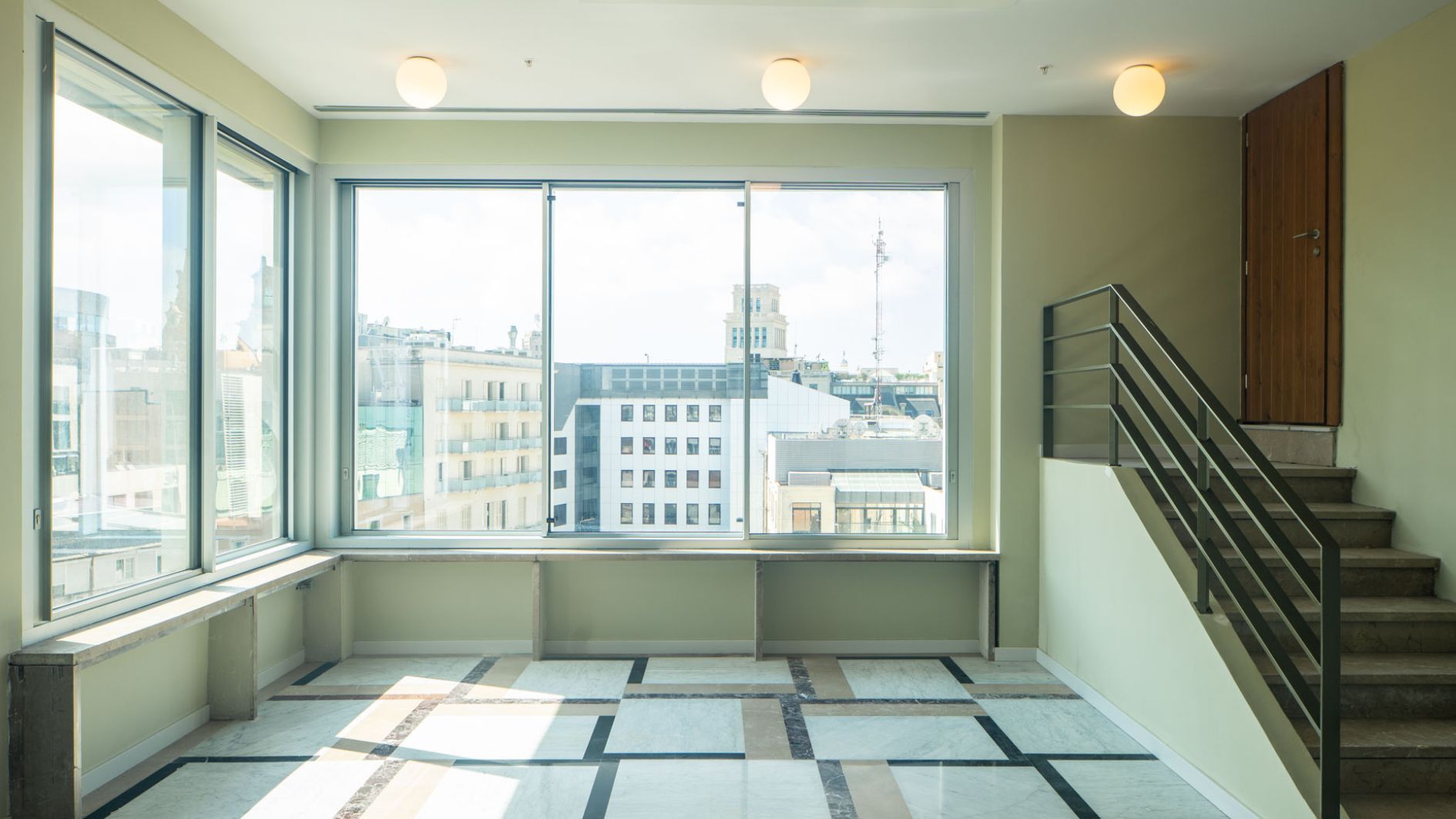
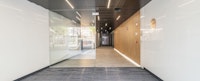
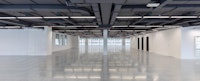
In the common areas, original materials were restored, and deteriorated areas were replaced with materials of equivalent quality. In newly renovated areas, high-quality finishes were applied using ceramic tiles, hydraulic paving, natural stone, and wood. In the office floors, raised access flooring and suspended ceiling systems were installed, in accordance with the building's new functional requirements.
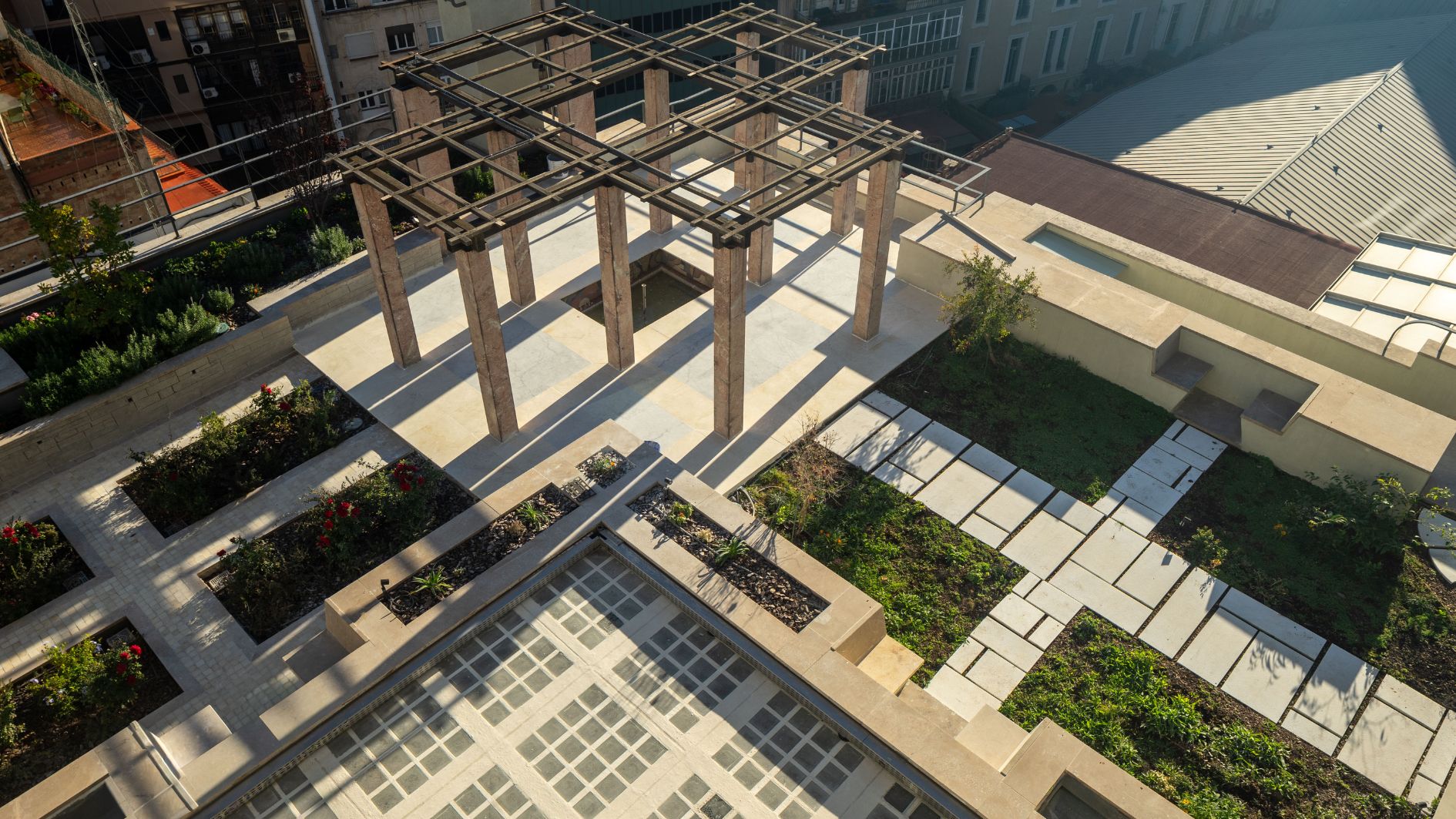
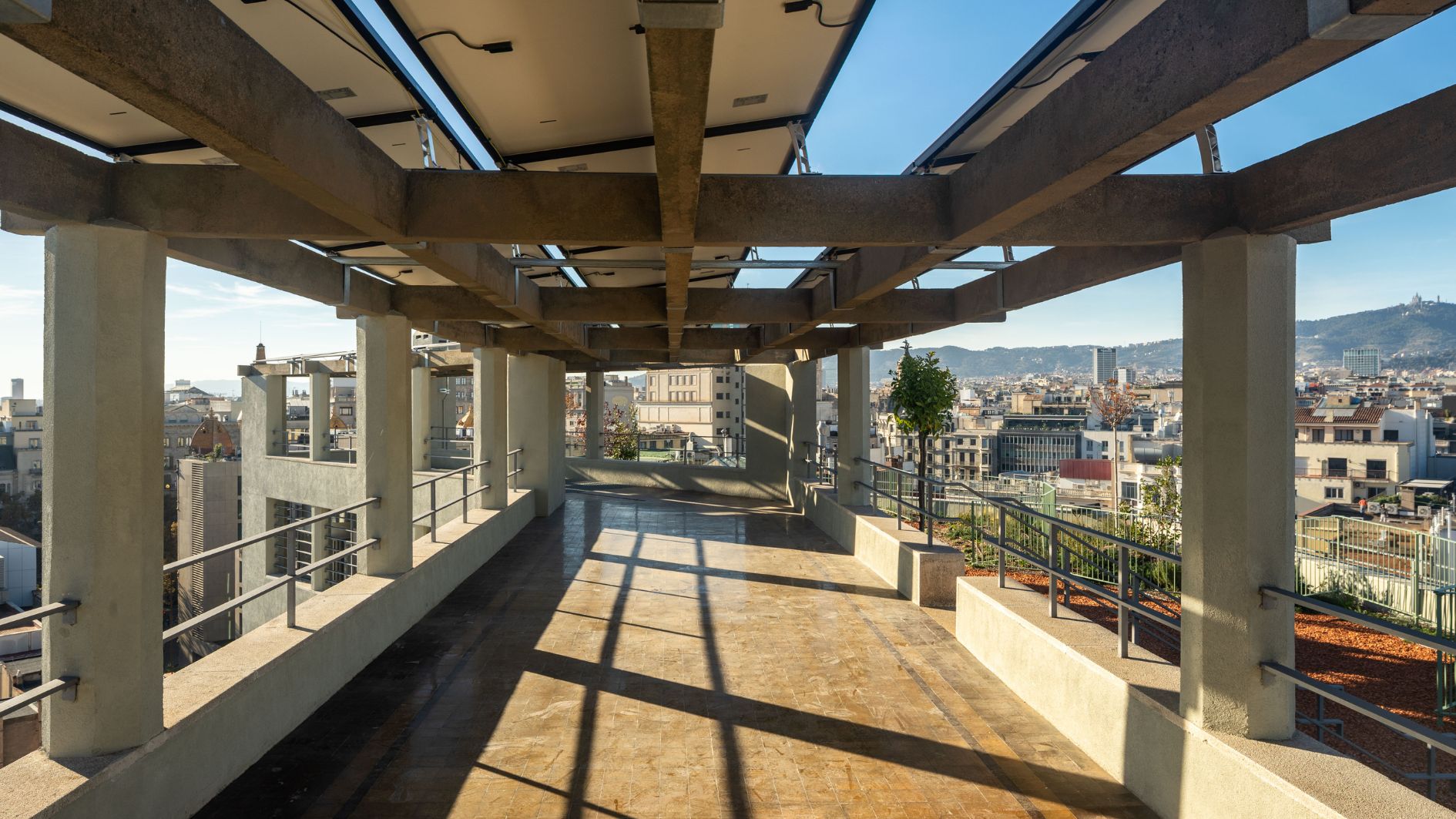
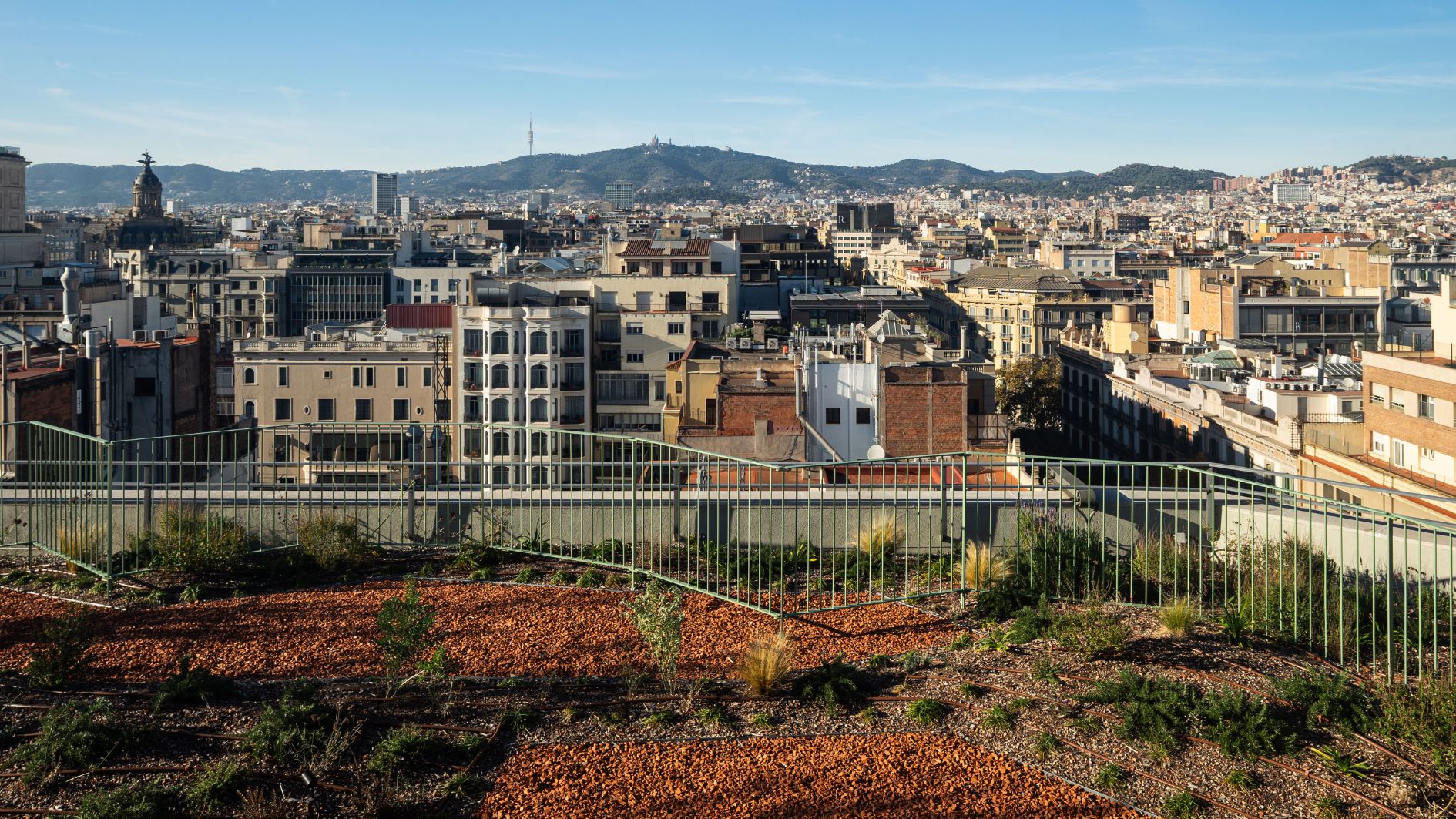
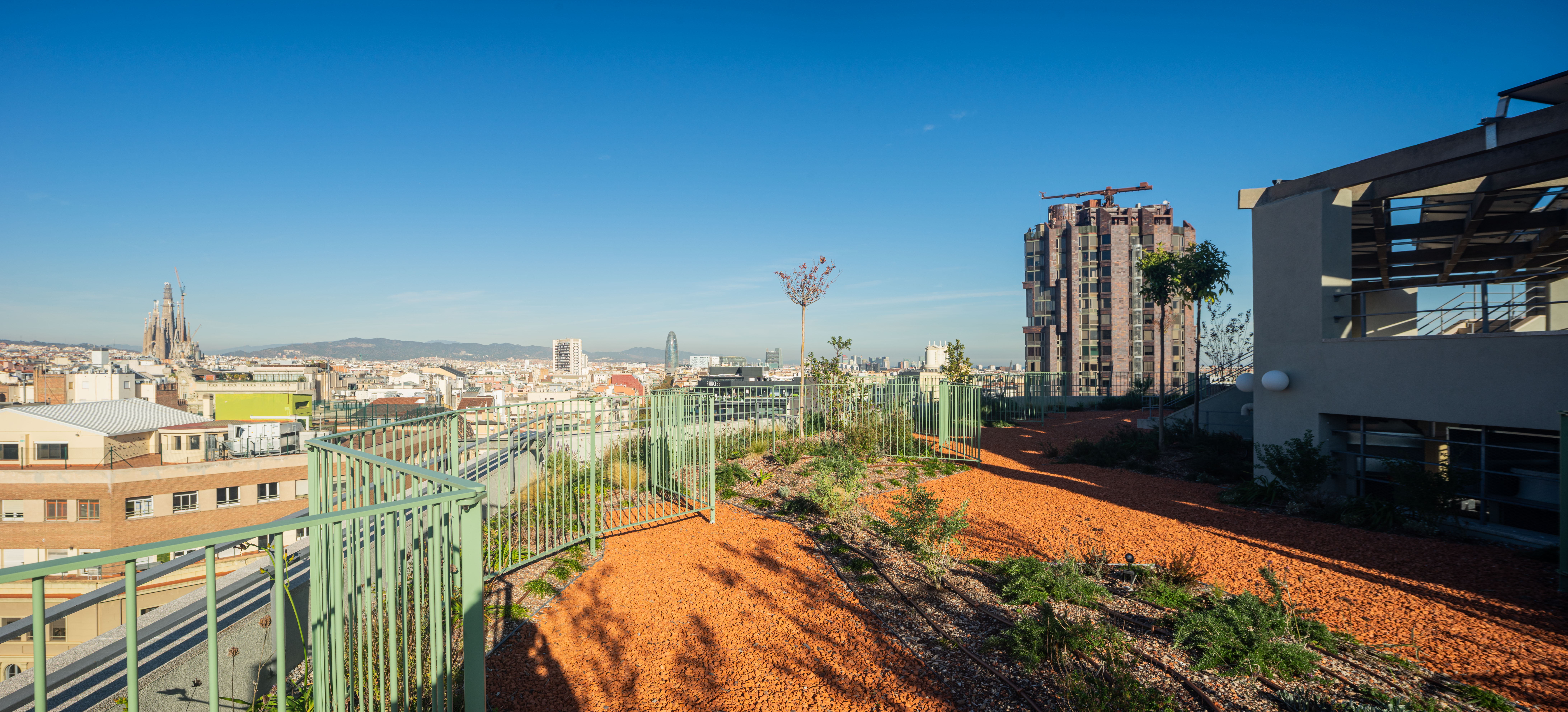
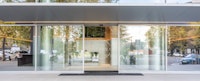
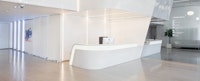
Exterior windows and doors were replaced with new oak units, respecting the original geometry and aesthetic, and incorporating double glazing to improve the building's performance. On the ground floor, a reception desk with access control and security was installed, and on the terrace, the gardens, fountains, and water feature in the protected area were restored.
MEP
The project included the complete installation of electrical systems, HVAC, fire protection, plumbing, telecommunications, and a building management system (BMS), as well as the corresponding installations for private areas. The building features a hybrid VRF air conditioning system with heat recovery, combined with passive bioclimatic strategies; a uniform lighting system with DALI control on the facades; video surveillance and access control using cameras and occupancy sensors; and a 90 m³ fire water tank.
The result
The result is a building that recovers its historical and architectural significance, yet is fully prepared to meet the current needs of offices and services. The intervention has preserved the building's heritage value while incorporating new structural, technological, and functional solutions, resulting in a unique asset in one of the most prestigious locations in the heart of Barcelona.
Thanks to rigorous and meticulous execution at every stage of the project, the building has achieved the necessary standards to obtain LEED Gold and WELL Silver certifications.
Casa Tecla Sala thus stands as an example of how comprehensive rehabilitation can enhance the value of built heritage, combining restoration, technical precision, and adaptation to new uses with a contemporary vision.
Legacy
Redefined
At FLULLE we are very proud to have been part of this long transformation project in the heart of Barcelona, a project with many challenges and after much work, we are reaping the rewards of things done well.
The Challenge
Updating a historic building without losing its essence
Services provided
- Licensing
- Fit-out
- Electrical Installations
- Mechanical Installations
- FP Installations
- Telecoms Installations
- Special Installations
- Security Installations





"It was a pleasure to have had FLULLE as a partner specialized in coworking space Fit-out in a number of our new LOOM locations"

"We have collaborated with FLULLE on different flexible Utopicus Fit-out projects with them as main contractor on 42 Francisco Silvela Avenue, 163 Castellana Avenue and 56 José Abascal Avenue. The key to success on those projects has been the constant collaboration of their teams, forging a confidence relationship and working together to achieve optimal results: the best quality and the shortest execution time. Their evolution in the construction business is very positive, and I foresee a great future for the integrated management of their services"
"I want to thank FLULLE for the professionalism in the work carried out for UCI (Union of Real Estate Credits), especially the construction team led by Javier and Laura. Furthermore, I will recommend FLULLE as a company specialized in implementation works and I hope that we can meet again in the near future"
"With FLULLE, at Utopicus’ offices on Francisco Silvela Avenue we have managed to make a project with more than 50 custom-made pieces of furniture and many tiny details and creative solutions look easy. They found a solution to every problem, and in front of every difficulty FLULLE has put everything in their hands to overcome them. We are eager to work with them again soon!"
"It was a success to have FLULLE for the implementation of our new offices, they are excellent professionals with a great human and project team. of which I would highlight their customer orientation, their orientation to finding solutions and especially their flexibility to adapt to our needs and demands, as well as their agility to respond to unforeseen events and their professionalism in both technical and economic aspects. They have been a true facilitator and partner in an always complex process for any company. Clearly I would count on them again in our projects."
"“It has been the greatest success to have FLULLE for the implementation of our new headquarters. A young and dynamic team, with great experience and professional competence. We couldn't have been in better hands. Thank you for your work and for the love you have put so that we could have this wonderful office”"
"Experts in installations and now with FLULLE’s inception they offer a very interesting comprehensive solution package for all their clients"
"I want to thank Allende Arquitectos as a planner, and FLULLE as a builder, their participation in the upgrade project of one of the most representative neomudéjar industrial style buildings in Madrid, preserving its architectonic value and creating modern, technological and efficient workspaces such as Repsol Electricidad y Gas’ offices in Madrid"
"FLULLE is a Leviton Licensed Integrator since more than a decade ago, offering their clients our solutions thanks to a team of people of the utmost professionality and paired to high quality pre-sales and after-sales services. We hope to extend our collaboration with FLULLE for many years and to achieve many more successes"

"FLULLE bestows upon me the peace of mind of working with a company with so many years of experience. They solve every unforeseen issue and they strive for perfection in every aspect"
""
"The interior finishing works they have carried out have had us astonished because of the quality levels and the technology applied. Congratulations on your trajectory over these years"
"I have known the FLULLE team since a short while ago. They were quick to transmit professionalism, reliability and efficiency"
"The building process is a team effort. FLULLE has always collaborated, bringing solutions in order for the project to achieve success"

"The added value FLULLE brings to the table is the proximity of the whole team, their customized assessment, in addition to the knowledge of all the working areas with expert personnel, and counting on very competent partners and/or suppliers. Even under a critical situation such as the Covid19 pandemic hit before the handover of our offices, they proved themselves ready to search for alternative solutions due to the stalling of operations with nearly all of our suppliers, maintaining their due delivery date"
"Working with FLULLE was superbly easy. Their technical team is extremely competent, and their workers are dependable and professional"

"With FLULLE as constructor and BNP Real Estate as planner and project manager, we have participated in different projects and the result has always been magnificent, achieving the highest satisfaction levels in clients. FLULLE focuses on projects with great professionalism and dedication, their priority being their clients’ and their expectations"
"The trust in the team and the pledge towards a proper execution of the project is what I would highlight from our collaboration with FLULLE"
"Collaborating with you has been a real pleasure, as you undertake jobs with great professionalism and commitment, with exquisite taste and a deep knowledge of the industry, helping companies in the development of their projects in optimal conditions. The results are a testament to your great endeavor and your good work. Keep up the good work, you are doing a fascinating job"
"The works undertaken by FLULLE have been of great professionalism, both in the finishing touches and in the support of their workers"
"FLULLE offers their clients an all-round finished product for the construction and management of their real estate assets"
"I’ve known FLULLE since before their inception. Thirty years of continuous work with Paco Cámara and his team, first as an installation and engineering company and later on as general contractor as well, and they are now embarking on a new adventure. We have walked beside Caja Madrid, CDTI, el Club Matador, Fjord, Jazztel, JP Morgan, Museo Thyssen, PWC, Vitra and a bunch of good friends… All the best for the next 30 years of FLULLE!"
"We have been able to see FLULLE’s transformation in the past few months and we have experimented their professionalism and efficiency, the convenience of having a single supplier providing all services brings us peace of mind and trust. Moreover, their Facility team gives us the guarantees necessary to our corporate standards"
"I trusted and I trust them because of their professionalism and dedication to every task they undertake"
"Working with FLULLE is simple, as they are always ready to solve any of our problems. We began with their turnkey program in our Madrid office, with left us fully satisfied, and we continued to maintain a tight collaboration for new operations in our facilities that full under the responsibility of their Facility Services staff, with commendable results"
"A business partner to rely on during the whole project, without a doubt a great choice"
"Multisectorial professionals, flexible and adaptive"
"There is a before and after our first Project together. We are very satisfied with FLULLE’s team in all senses, as we have been able to see firsthand what it’s like to work with a truly flexible business partner, ensuring at every moment that the works for the Regus Alicante, Business World project were being properly carried out"